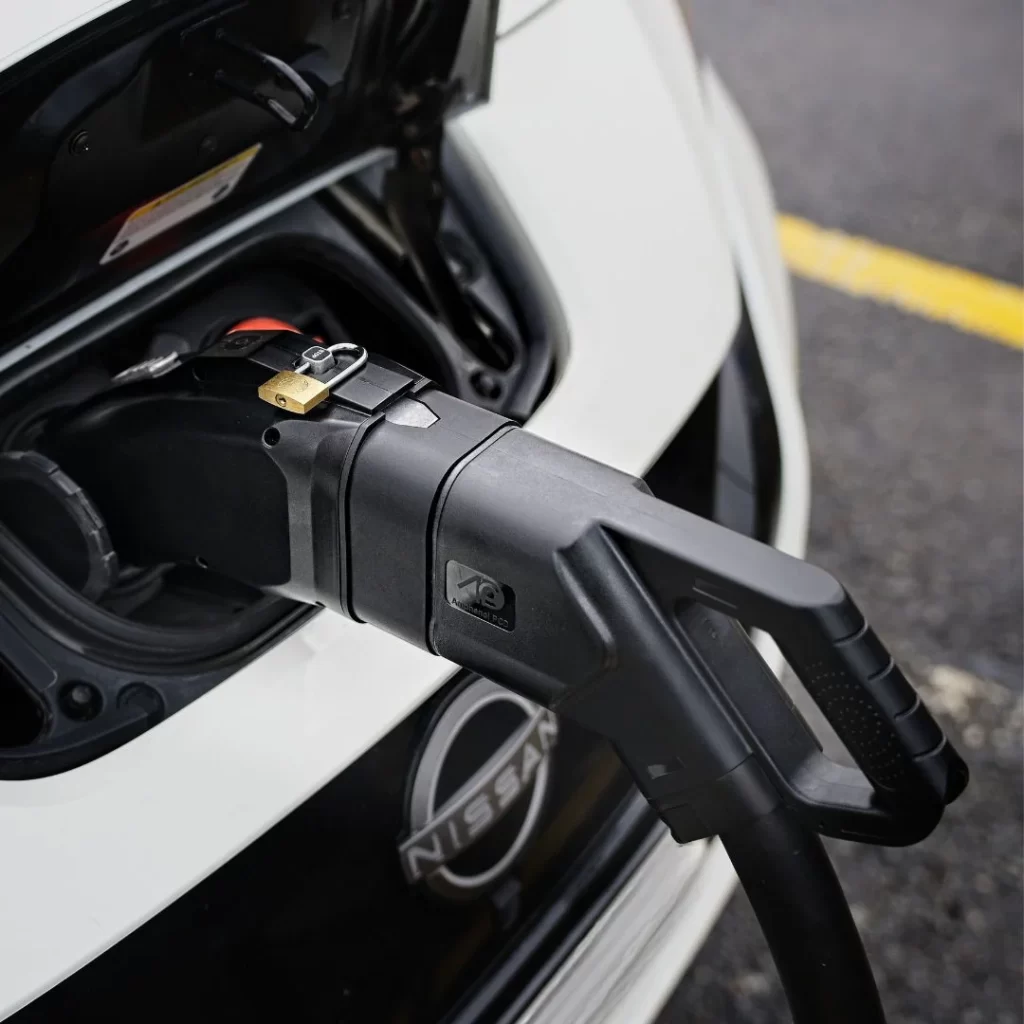
A cheaper CCS to CHAdeMO adapter can look attractive at first. The photos may look similar, the product name may sound similar, and the basic promise is usually the same: use CCS fast chargers with a CHAdeMO car.
The real comparison starts after the price.
This article uses the Longood CCS to CHAdeMO adapter sold by Autonlaturit.com as the reference point, because that is the adapter we sell and support. Longood was the first CCS to CHAdeMO adapter on the market, which gives it a longer real-world testing history than newer alternatives. The aim is not to say that every cheaper alternative is automatically bad. The aim is to show what buyers should verify before deciding that a lower price is actually a good deal.
A CCS to CHAdeMO adapter is not a simple plug. It is a high-voltage DC fast-charging device with electronics, firmware, communication logic and real compatibility requirements. For many buyers, the right question is not “which adapter is cheapest?” but “which adapter can I trust when I need to charge?”
Start with the total cost, not the headline price
The price shown in a search result is only one part of the purchase.
Before comparing two adapters, check the full delivered cost:
- Is VAT included?
- Is delivery included?
- Are there import duties or customs fees?
- What happens if the adapter needs to be returned?
- Who pays return shipping?
- Is warranty handled locally or internationally?
- Is the seller inside or outside your region?
- Are payment fees or currency conversion costs involved?
A lower product price can still become less attractive if the final cost is unclear or if support and returns become difficult later.
For EU customers, this is especially important. Buying from inside the EU can make pricing, VAT, delivery and warranty handling much easier to understand.
Check the regional version first
Before comparing quality, compare the basic version.
For Europe, the relevant connector is usually CCS2. In North America, it is usually CCS1. A CCS1 adapter and a CCS2 adapter are not interchangeable for normal use.
A buyer should check:
- Is the adapter CCS1 or CCS2?
- Is it intended for your charging region?
- Does the seller clearly explain the regional version?
- Does the product page show the correct connector?
- Are the photos and description consistent?
If a listing is unclear about CCS1 vs CCS2, treat that as a warning sign. The wrong regional version can make the adapter useless for your charging network.
Compare voltage and current ratings
A CCS to CHAdeMO adapter is used for DC fast charging, not ordinary AC charging.
The Longood CCS to CHAdeMO adapter is built for up to 1000V DC and up to 200A continuous current. Those figures do not mean every car will charge at maximum power. Your vehicle still controls the actual charging speed. Battery temperature, state of charge, car limits and charger behaviour all affect the result.
The rating still matters.
When comparing cheaper alternatives, check whether the adapter is rated for the charging environment you expect to use. Do not assume all CCS to CHAdeMO adapters are built to the same electrical limits.
Ask:
- What is the maximum voltage rating?
- What is the maximum continuous current rating?
- Is the rating clearly stated?
- Is the rating realistic for modern CCS chargers?
- Is the product suitable for the car and charger network you plan to use?
If the seller does not clearly state voltage and current ratings, the comparison is incomplete.
Compare compatibility evidence, not just compatibility claims
Most adapter listings say the product is compatible with many CHAdeMO vehicles. That is easy to write. Real compatibility is more specific.
The Longood adapter has the strongest known compatibility data with Nissan Leaf models, because the Leaf is the most common CHAdeMO car in Europe and has generated the most real-world use. It is also used with models such as the Nissan e-NV200 and Lexus UX 300e.
Longood was the original CCS to CHAdeMO adapter, and it has had more time to build real-world compatibility experience across different cars, charger brands, charging networks and countries. That kind of long-term field experience is difficult for a new or unknown alternative to match immediately.
On the Longood CCS to CHAdeMO adapter product page at Autonlaturit.com, buyers can also use a compatibility tool to check whether their specific vehicle is supported.
A cheaper alternative may still work well. The buyer should ask for the same type of evidence. A broad promise like “works with CHAdeMO cars” is not the same as tested compatibility with your car, your region and the chargers you actually use.
Do not expect perfect charger compatibility from any adapter
No CCS to CHAdeMO adapter should be presented as perfect with every charger in every situation.
Public fast chargers are not identical. Charger manufacturers, charging networks and station operators use different hardware and software versions. A station can also receive a software update that changes how it behaves during the charging handshake.
Even a good adapter may occasionally need a retry, a different startup timing, a firmware update or a different charging pedestal.
The difference between adapters is not whether a charging issue can ever happen. The difference is what happens next.
Can the adapter be updated? Can the seller help? Can useful information be collected? Is there a development path for improving compatibility?
Those questions are more useful than a universal compatibility promise.
Compare firmware support carefully
Firmware is one of the biggest differences between CCS to CHAdeMO adapters.
The adapter has to manage communication between a CCS fast charger and a CHAdeMO vehicle. If the communication timing or behaviour is not right, charging may fail to start.
A good firmware path can improve compatibility over time.
When comparing alternatives, ask:
- Who provides the firmware?
- Is there a clear update process?
- What happens if a charger network update creates a new issue?
The Longood adapter can be updated by USB. It is also supported by an independent open-source firmware project. This is a real advantage, because future development is not dependent only on the original manufacturer.
The manufacturer also now ships new Longood adapters with this open-source firmware direction.
A cheaper adapter without a clear firmware path may still work today. The question is how well it can keep working as the charging network changes.
One practical question is whether firmware development depends entirely on the original manufacturer.
The Longood adapter is unusual in this category because it is supported by an independent open-source firmware project in addition to manufacturer firmware development. For buyers, this is less about software philosophy and more about long-term support. Compatibility improvements can continue based on real-world use with different cars and CCS chargers, and development is not tied to a single company’s priorities.
Before buying any adapter, it is worth asking what happens if charger behaviour changes in the future. If the only update path depends on occasional manufacturer releases, that creates a different support situation than a product with both manufacturer involvement and an active independent development community.
Compare seller support, not only the product
A CCS to CHAdeMO adapter is a product where support can be genuinely useful.
If charging does not start, the cause may be simple:
- the adapter is not fully seated
- the CCS cable is not properly locked
- the adapter battery is low
- the charger timed out during the handshake
- the car is already at a high state of charge
- the charger has a station-specific issue
- the adapter needs a firmware update
Without support, all of these can look like the same problem: “the adapter does not work.”
A good seller can help separate a connection problem from a charger problem, a car limitation from a firmware issue, and a one-time station failure from a repeatable compatibility case.
When comparing sellers, ask:
- Can you contact a real company?
- Is there an email address, phone number and business identity?
- Does the seller understand the product?
- Does the seller give realistic answers?
- Is troubleshooting help available after purchase?
- Are firmware updates supported?
- Are returns and warranty terms clear?
A cheaper marketplace listing may still be acceptable if the seller can answer these questions properly. If not, the price difference may be buying more uncertainty.
Compare warranty and return terms
Warranty matters more with a specialist charging product than with an ordinary cable.
The adapter is used outdoors. It is connected to heavy public fast-charging cables. It handles high voltage and high current. It may be carried in the car, used in winter weather and relied on during long trips.
Before choosing a cheaper option, check:
- How long is the warranty?
- Who handles warranty claims?
- Is the warranty written clearly?
- Is there a satisfaction guarantee or return period?
- What happens if the adapter does not work with your car?
- What happens if it works at some chargers but not others?
- Does the seller help before starting a warranty claim?
The Longood adapter sold by Autonlaturit.com includes a 30-day satisfaction guarantee and a 2-year warranty.
Those terms reduce the buyer’s risk. They are especially useful with a compatibility product, where the customer may want to test the adapter in real daily use.
Check what comes in the package
Two adapters can look similar but come with different accessories and instructions.
For the Longood adapter, the package and support material are designed around real use. The adapter includes update accessories, USB-based firmware update capability, charging instructions and practical guidance for first use.
When comparing cheaper alternatives, check whether the package includes:
- clear user manual
- USB update cable
- USB flash drive or update accessories
- storage bag
- charging instructions
- firmware update instructions
- troubleshooting instructions
- support contact information
Accessories are not just extras. They affect how easy the product is to own, update and troubleshoot.
Compare physical design and practical details
Physical design is easy to overlook when comparing specifications, but it becomes important every time the adapter is used at a charging station.
The Longood adapter includes a locking mechanism on the CCS side. It is also rated IP54 when connected to the car and CCS plug, and it is designed for outdoor use.
Practical design details rarely determine whether an adapter works at all, but they often determine how pleasant it is to use over months or years of ownership.
An adapter that is easy to connect, secure under the weight of a CCS cable and comfortable to handle in different weather conditions can make a noticeable difference in everyday charging.
The same standard should be applied to cheaper alternatives. Marketing photos can be useful, but they are not a substitute for detailed specifications, documented features and real-world user experiences.
Compare safety and compliance information
Safety claims should be specific.
A buyer should look for clear information about:
- voltage rating
- current rating
- operating temperature
- protection class
- applicable standards
- certification or compliance information
- safe use instructions
- warnings about damaged equipment
- instructions for disconnecting safely
Avoid adapters where the safety information is vague, missing or copied from generic charging products.
A serious seller should explain that the adapter is high-voltage charging equipment and should be handled accordingly. The product should not be presented like a harmless travel plug.
Read customer reviews differently
A star rating is useful, but the review text is often more valuable.
A review saying “works great” is nice. A review saying which car, which charger network and what happened during real charging is more useful.
When comparing cheaper alternatives, check whether real users have reported successful charging with cars similar to yours. If the listing has only generic reviews or no meaningful technical feedback, the buyer has less to rely on.
Be careful with universal promises
A serious CCS to CHAdeMO adapter seller should not pretend that the product works with every car, every charger and every charging network in every situation.
The honest version is more useful:
- compatibility depends on the car
- charger behaviour can vary
- firmware support matters
- some stations may need a retry
- a backup charging plan is still wise
- support may be needed for unusual cases
A seller who explains these points clearly is usually more trustworthy than one who makes the product sound effortless in every possible situation.
A lower price paired with vague universal promises is not a strong combination.
When can a cheaper alternative make sense?
A cheaper alternative can make sense if the important details are clear.
It may be a reasonable option if:
- it is the correct CCS1 or CCS2 version for your region
- the voltage and current ratings suit your use
- compatibility with your car is documented
- real customers have used it successfully
- firmware updates are available
- the seller offers real support
- warranty and return terms are clear
- the total delivered cost is transparent
- you are comfortable with the level of risk
Price comparison is normal. A buyer should not overpay for a product just because it sounds more premium.
But the lower price should survive a detailed comparison. If the cheaper option can answer the same practical questions, it deserves consideration. If it cannot, the lower price may simply reflect missing support, weaker documentation or higher uncertainty.
How does the Longood adapter compare?
The Longood CCS to CHAdeMO adapter is not the cheapest possible way to buy an adapter. Its value is in the full package.
When bought from Autonlaturit.com, the offer includes:
- the original Longood CCS to CHAdeMO adapter
- CCS2 compatibility for European CCS fast chargers
- one of the longest real-world testing histories in this adapter category
- 1000V DC and 200A continuous current rating
- tested use with common CHAdeMO vehicles
- open-source firmware support
- USB-based firmware update capability
- update accessories
- practical instructions
- customer support
- free delivery
- a 30-day satisfaction guarantee
- a 2-year warranty
- a Finnish retailer with clear contact information
The strongest argument for Longood is not that cheaper adapters must be bad. It is that Longood has a clearer support ecosystem: the original adapter, long real-world use, updateable firmware, open-source development, manufacturer adoption of that firmware direction, and a seller prepared to support the product after delivery.
Bottom line
A CCS to CHAdeMO adapter should not be compared like a simple cable.
The right comparison includes hardware ratings, regional version, compatibility evidence, firmware support, seller support, warranty, delivery terms, documentation and real-world ownership.
Longood’s advantage is its combination of being the original CCS to CHAdeMO adapter, having a long real-world testing history, and offering a clear support path through firmware updates, open-source development and seller support. Based on our experience, it is the best adapter currently available.
For a driver who only needs an adapter once, the cheapest listing may be tempting. For a driver who wants to keep a CHAdeMO car useful in Europe’s CCS-focused charging network, the more important question is whether the adapter will remain reliable and supported over time.