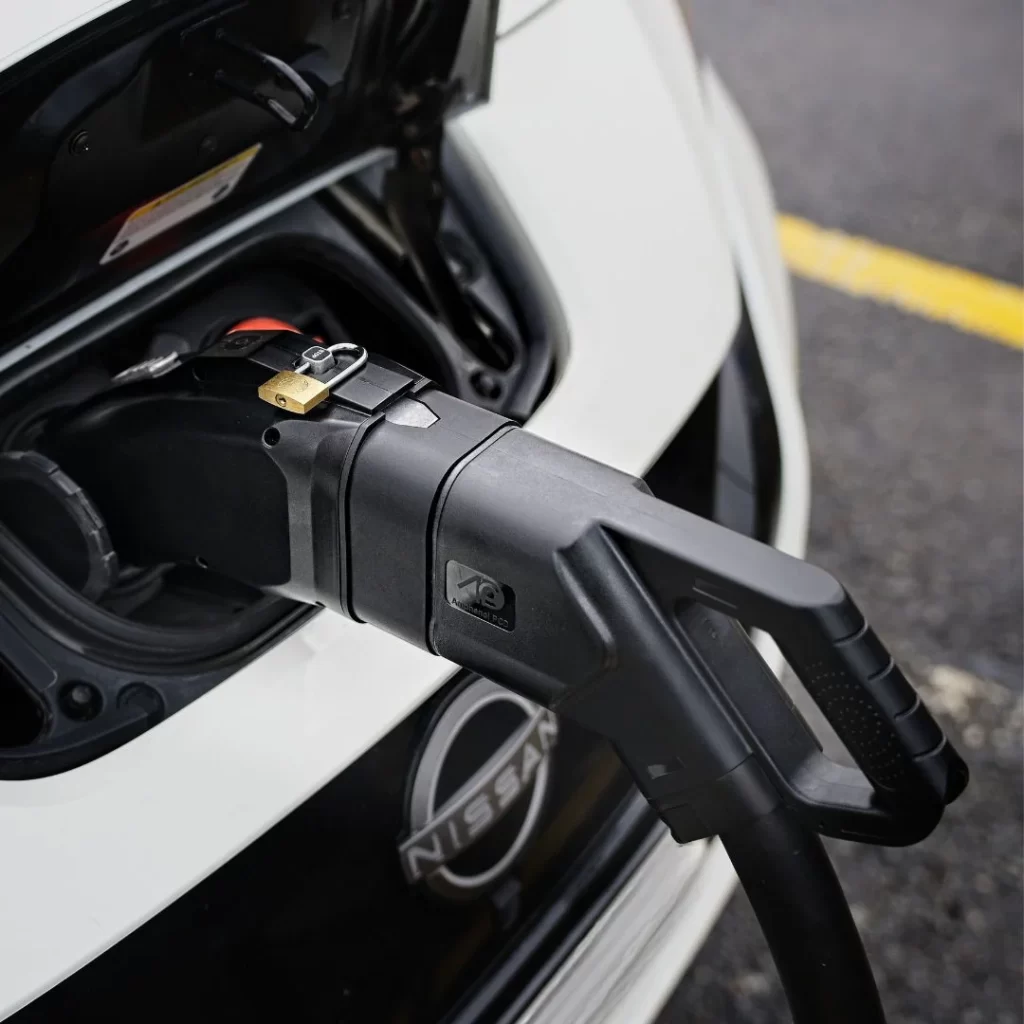

Summer is still one of the best times to take a Nissan Leaf on a longer trip. Range is usually more predictable than in winter, roads are easier, and the whole experience tends to feel lighter. At the same time, summer brings its own challenges. High motorway speeds, warm weather, mountain roads, holiday traffic, and repeated fast charging can all make a Leaf feel very different by the end of the day than it did when the trip began.
That is why getting a Leaf ready for a summer road trip is not just about packing the cable and hoping for the best. A smoother trip usually starts before you leave home. It starts with how you prepare the car, how you plan the route, how you think about charging stops, and how well your adapter setup is ready before the holiday begins.
In 2026, that preparation matters more than ever. The charging network across Europe keeps moving toward CCS, which means a CHAdeMO car can still be a very good travel companion, but it helps a lot if the car is ready for the network it will actually meet on the road.
Is your Nissan Leaf really ready for a summer road trip?
The first question is not about destination. It is about condition.
A Leaf heading into a summer trip should feel sorted before the journey starts. That does not mean doing anything dramatic. It means covering the basics that actually affect comfort, efficiency, and charging.
Tyre pressures are one of the easiest and most useful examples. They are easy to overlook because the car may still feel normal on a short local drive. On a long summer motorway run, they matter much more. Correct tyre pressures help the car roll efficiently, feel more stable, and avoid avoidable stress on the tyres themselves. If pressures are off, the penalty is not only efficiency. The whole trip can become a little less calm and a little less efficient without the driver fully noticing why.
The same applies to the small things that tend to get ignored until they become annoying on the road. Is the charging cable where it should be? Is the charging port area clean and normal? Does the car start and behave exactly as expected? Are there any warning lights or odd electrical behaviors that you have been meaning to “look at later”? A long trip is not the right time to discover that a small unresolved issue is bigger than it seemed.
A summer trip also rewards drivers who prepare the cabin as well as the battery. If the car can be cooled down before departure while still plugged in, that is worth using. It makes the first part of the drive more comfortable and avoids using the traction battery for that first wave of cabin cooling after you set off.
How should you prepare the adapter before the trip starts?
A CCS to CHAdeMO adapter should not be treated like a gadget you throw in the boot and hope to remember later. If it is going to be part of your summer travel plan, it should be part of your preparation too.
The most useful step is also the simplest one: check that the firmware is current before you leave. That matters because compatibility in this category is not static. Charging networks evolve, charger behavior changes, and a supported adapter is always more valuable when it has been updated before the trip rather than during it.
This is one reason the Longood adapter sold by Autonlaturit.com is especially relevant for Leaf drivers preparing for summer travel. The firmware can be updated by the user, and the product is supported as a real charging product rather than sold as a one-time accessory. That matters much more on a European road trip than it does on a casual local test.
The second step is to do one successful test charge before the holiday begins. That is worth far more than reading ten product pages the night before departure. Once you have used the adapter with your own car, on your own account, at a real charger, the trip starts with much more confidence.
That one test takes uncertainty out of the first holiday stop.
How should you plan a Leaf route for summer 2026?
The route should fit the car, not the other way around.
This matters on any EV trip, but especially on a Leaf. A good summer route is not just a sequence of charging points on a map. It is a sequence of sensible charging opportunities that match the car’s range, battery behavior, and your margin for error.
That is why route planning tools make such a difference. A Better Routeplanner is a good starting point because it helps model the trip around the car and the likely charging legs. PlugShare and Chargemap are useful because they add the reality layer: connector details, recent user reports, station photos, and the sort of practical context that matters when you are not just planning on paper.
A good Leaf route usually has two levels. The first is the intended plan. The second is the nearby fallback if the first charger is busy, broken, or simply not the stop you expected. That backup thinking is not pessimistic. It is one of the easiest ways to keep a long trip calm.
Summer also adds a specific planning issue that is easy to underestimate: terrain. Mountain roads and long climbs can affect both consumption and battery temperature. A route that looks comfortable in flat terrain can feel much tighter once elevation changes are added to the day. That is another reason to leave buffer in the plan rather than building the whole day on perfect assumptions.
What charging strategy usually works best on a summer Leaf trip?
The most useful strategy is usually to charge for the next good leg, not automatically to full.
That sounds simple, but it changes a lot.
A Leaf tends to give the best value in the lower and middle part of the battery. As the state of charge climbs higher, charging slows down. That means the final stretch toward a very high battery percentage often adds less useful distance for the time you spend waiting.
On a summer trip, the practical result is that shorter, well-placed charging stops often work better than fewer, longer ones. You are not trying to leave every station with the fullest possible battery. You are trying to leave with enough energy for the next sensible stop while avoiding unnecessary time in the slowest part of the charging curve.
That does not mean a high charge is never worth it. If the next part of the route is weaker, less certain, or more remote, charging higher can still make sense. But as a default summer road-trip habit, waiting longer than necessary is one of the easiest ways to turn a good Leaf day into a slow one.
Why does summer heat matter so much on a long Leaf drive?
Because it changes what happens later.
This is one of the most important things to understand before a summer motorway trip. On a Leaf, battery temperature is not just background information. It affects charging behavior.
A warm day alone does not cause problems. But combine warm weather with sustained motorway speed, repeated fast charging, heavy traffic, or long climbs, and the battery can end up hotter than the driver expected. Once that happens, later charging stops can take longer.
That is why summer long-distance driving is partly about managing heat, even if drivers do not usually describe it that way.
The practical version is straightforward. Avoid creating unnecessary heat before it becomes a problem. That means not treating every motorway section like a race, not assuming that repeated rapid charges have no cost later in the day, and not expecting the battery to behave the same way on stop three as it did on stop one.
A smoother pace can sometimes produce a faster overall trip because the charging stays healthier.
How do you keep the car cooler and the trip easier?
A few small choices make a bigger difference than people first expect.
Pre-cooling the cabin while the car is still plugged in is one of them. So is starting the day with overnight charging if that is available. A full battery in the morning matters, but so does starting with a calmer thermal situation and less urgency around the first stop.
Driving style matters too. A slight reduction in motorway speed can reduce consumption and reduce heat buildup at the same time. That does not always feel dramatic from behind the wheel, but it can show up later as a better charging stop.
Stop rhythm matters as well. A route that pushes the car into repeated rapid charges with no real break may look efficient on paper, but on a hot day it can become slower by the afternoon. A route with better-spaced legs and smarter stop choices often feels more relaxed and performs better overall.
That is why summer Leaf travel is not really about one trick. It is about giving the car conditions it can work with all day.
Why does a CCS to CHAdeMO adapter matter even more in Europe in 2026?
Because the charging network Leaf drivers meet on the road is increasingly a CCS network.
That does not mean CHAdeMO has vanished. It means the practical center of gravity has shifted. More and more strong fast-charging sites are built around CCS as the default connector, especially on routes designed for longer travel.
For a Leaf driver, that changes what “being ready for summer travel” means.
It is no longer just about the condition of the car. It is also about whether the car can reach enough of the charging network that now exists around it.
That is where a good CCS to CHAdeMO adapter becomes much more than a backup tool. It becomes part of the travel setup.
The adapter does not change the Leaf’s own charging behavior. It does not remove the car’s own limits. But it does make a summer trip much easier to plan because it gives access to many more viable stops, better backups, and less dependence on the smaller set of CHAdeMO chargers still available.
That practical flexibility is a major advantage on summer routes, when queues, busy sites, and holiday traffic make backup options more valuable than ever.
Why does the right adapter matter so much before a holiday trip?
Because summer travel is not the moment to test an uncertain setup for the first time.
A strong adapter in this category should have real compatibility behind it, real support behind it, and a seller who understands how the product is used in actual travel.
The Longood adapter fits that logic well. It is presented as working with all Nissan Leaf battery versions, it has broad proven compatibility across Europe, and it is supported through firmware updates when charger-specific issues appear. That matters much more before a holiday than a vague claim about “works with CCS.”
There is also a longer-term confidence angle. To the best of our knowledge, this is the only CCS to CHAdeMO adapter with an open source firmware option supported by independent developers. That gives the product a stronger path forward if compatibility needs keep evolving.
What is the best way to think about a Leaf summer trip in 2026?
Think less about maximum charging speed and more about trip flow.
A well-prepared Leaf can still be an excellent summer travel car in 2026. The trick is not pretending it behaves like every other EV on the market. The trick is understanding how it likes to travel.
Keep the battery from getting unnecessarily hot. Build the day around good stops rather than maximum percentages. Start cool and full when you can. Use the adapter to reach stronger charging options, not to chase unrealistic power numbers.
That is what getting your Nissan Leaf ready for summer 2026 road trips really means.
The goal is not just to leave home with a packed car. It is to leave with a setup that makes the whole journey easier.