If your current Nissan Leaf still covers your daily driving, has a healthy battery and charges reliably at home, replacing it may not make financial sense.
The new 2026 Leaf offers much longer range, native CCS charging and better battery temperature management. Those improvements are most valuable to drivers who regularly travel beyond their car’s comfortable range.
For many owners, the decision comes down to one question: is the car itself limiting you, or is the main problem access to public fast chargers?
What does the new 2026 Nissan Leaf improve?
The third-generation Leaf is a very different car from the older CHAdeMO models.
In Europe, it is available with 52 kWh and 75 kWh usable batteries. The 75 kWh version has an official WLTP range of up to 622 kilometres. It uses CCS2 for DC charging, supports battery preconditioning and can charge from 20 to 80 per cent in around 30 minutes under suitable conditions. The car also has an 11 kW onboard AC charger.
The navigation system can plan charging stops and prepare the battery before arrival. The battery thermal management system also makes repeated fast charging more predictable than in older Leaf models.
These are meaningful improvements for long-distance driving. They are less important if most of your driving happens close to home.
When does keeping an older Leaf make sense?
Keep your current Leaf if it still does the job you bought it for.
A healthy older Leaf can remain an inexpensive and practical daily car. If you charge at home, drive predictable distances and rarely need public fast charging, the new model may not change your everyday life enough to justify the cost.
An older car may also be paid off or close to it. A new Leaf introduces a purchase price, financing costs, depreciation and potentially higher insurance costs. Lower energy use or faster charging will not automatically recover that difference.
The condition of your own car is more important than its age. A well-maintained Leaf with a healthy battery can be a better financial choice than replacing it simply because a newer generation has arrived.
How important is the battery condition?
Battery health should be checked before making the decision.
Look at the car’s usable range in normal driving, not the number shown immediately after a full charge. Pay particular attention to winter range, motorway range and how much reserve remains at the end of your regular journeys.
A battery that comfortably handles your routine may still have years of useful life left.
A heavily degraded battery changes the calculation. If the car requires frequent charging, loses too much range in winter or no longer completes normal journeys comfortably, upgrading becomes easier to justify.
Compare the cost of changing cars with the cost of continuing to use the current one. A reduced resale value does not necessarily make the older car expensive to own. It may simply mean that keeping it is more sensible than selling it cheaply.
Is public fast charging the main problem?
Older European Leaf models use CHAdeMO for DC fast charging. The new European Leaf uses CCS2.
CHAdeMO charging is still available, but new fast-charging sites are increasingly built around CCS. An older Leaf can therefore become harder to use on long journeys even when the battery and the rest of the car are still in good condition.
Repeated fast charging is another difference. Nissan states that charging can take longer when an older Leaf’s battery becomes hot and its battery protection system activates. High-speed driving, warm weather and repeated fast charging can all raise battery temperature.
The 2026 Leaf addresses both issues with native CCS2 charging and active battery temperature management.
Drivers who regularly make long motorway journeys will notice these changes far more than drivers who mainly charge overnight at home.
Can a CCS to CHAdeMO adapter delay the need to upgrade?
Yes, if charging access is the main reason you are considering a new car.
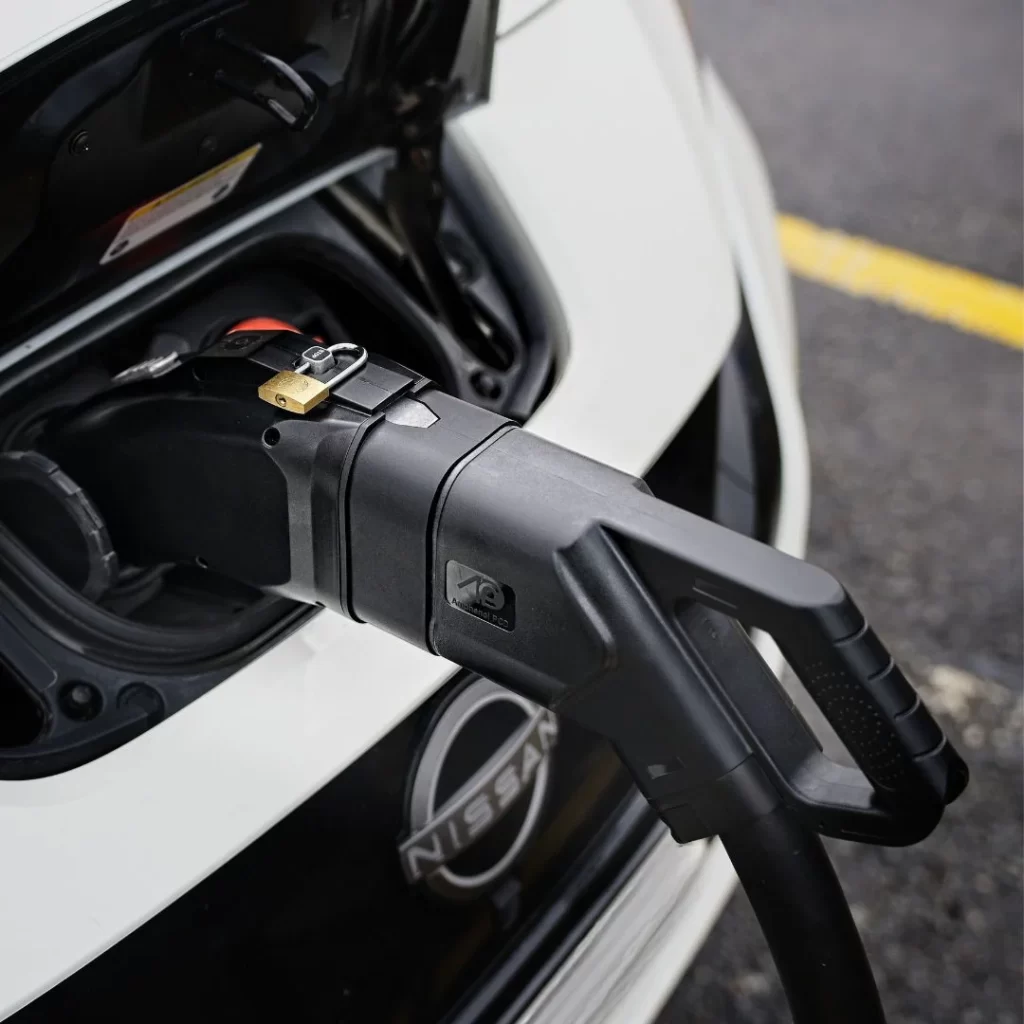
A compatible CCS to CHAdeMO adapter allows an older Leaf to use compatible CCS fast chargers. The Longood adapter sold by Autonlaturit.com has been tested with 24, 30, 40 and 62 kWh Nissan Leaf models.
The adapter does not increase the size of the battery. It does not add active battery cooling, improve winter range or give the car the technology and warranty of a new model.
It does solve the connector problem.
An owner who is otherwise happy with a current Leaf may find that wider charging access is enough to keep the car practical. Buying an adapter is a much smaller decision than replacing the entire vehicle.
Which older Leaf owners have the strongest reason to upgrade?
Owners of early Leafs with smaller or heavily degraded batteries have the clearest case.
Short range can affect daily driving, winter use and motorway travel. Better charging access cannot remove the need to stop frequently. An adapter gives access to more chargers, but it does not reduce the car’s energy consumption or increase the amount of energy stored in the battery.
Drivers with a healthy 40 kWh or 62 kWh Leaf may have less reason to change immediately. These cars can still cover many daily journeys and occasional longer trips, especially when home charging and CCS access through an adapter are available.
A 62 kWh Leaf owner may gain more from the new model’s thermal management, native CCS and modern software than from range alone. The older car may already provide enough range for most journeys.
When is the new Leaf worth the upgrade?
The 2026 model is easier to justify when you regularly experience one or more of these problems:
Your current range is no longer enough in winter.
You depend heavily on public fast charging.
Long trips require too many stops.
Repeated fast charging slows later sessions.
You want native CCS charging without carrying an adapter.
You need better route planning, battery preconditioning or a new-car warranty.
The new Leaf is also a more suitable choice for drivers who want one car to handle commuting, family use and frequent long-distance travel without much route preparation.
What should you compare before deciding?
Compare your current car with the new model based on real use.
Start with your normal weekly driving. Note how often you exceed the comfortable range of the current battery and how often you use public fast charging.
Then look at the journeys that cause problems. A holiday trip made once a year may not justify replacing a reliable car. A difficult motorway journey made every week is a different situation.
Consider how long you plan to keep the next car. The value of the new model’s larger battery, CCS charging and thermal management grows when the car will be used for many years and many kilometres.
A test drive should include more than acceleration and interior features. Check seating comfort, visibility, luggage space, controls and the route-planning system. The new Leaf is not simply an older Leaf with a larger battery.
Should you keep the old Leaf and buy an adapter instead?
This is often the most balanced option for owners whose cars still have enough range.
You keep a familiar vehicle with low ownership costs and add access to compatible CCS chargers when public fast charging is needed.
It works best when the battery is healthy, most charging happens at home and long trips are occasional.
It works less well when range, battery degradation or repeated fast-charging performance are already major problems. Those limitations remain after adding an adapter.
Bottom line
Keep your older Nissan Leaf if its battery still covers your normal driving and the car remains reliable.
Consider a CCS to CHAdeMO adapter if the car is still suitable but CHAdeMO access is limiting where you can charge.
Upgrade to the 2026 Leaf if you regularly need longer range, native CCS charging, battery preconditioning and more consistent fast charging.
A new model is not automatically the better financial decision. It is the better decision when it solves problems that your current Leaf can no longer handle.