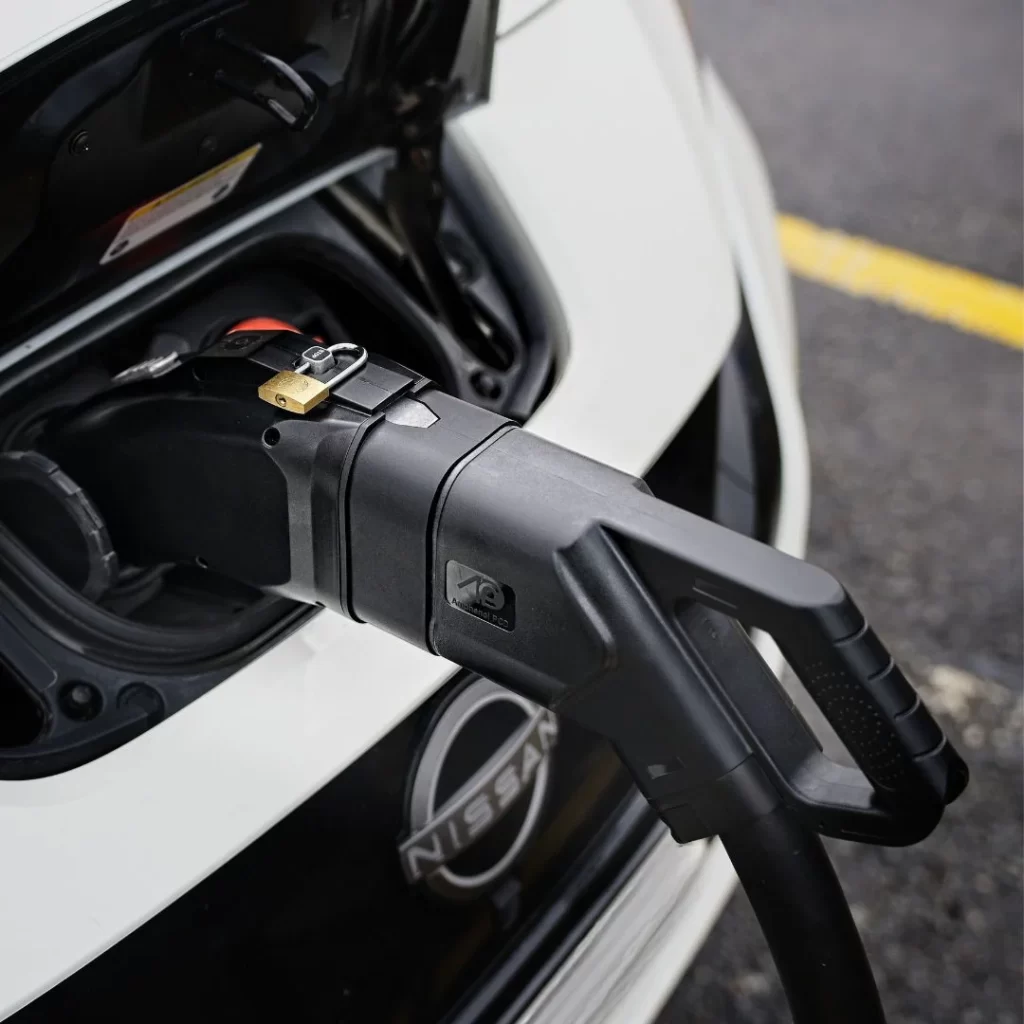
A properly certified CCS to CHAdeMO adapter does not damage your EV battery when used correctly. Quality adapters work alongside your vehicle’s existing battery management system rather than bypassing it, meaning your car maintains full control over charging parameters. The key to battery safety lies in choosing a well-tested adapter from reputable suppliers and ensuring it meets proper certification standards for your specific vehicle model.
What is a CCS to CHAdeMO adapter and how does it work?
A CCS to CHAdeMO adapter is a device that enables CHAdeMO-equipped electric vehicles to charge at CCS fast-charging stations. This adapter bridges two different charging standards, allowing drivers of CHAdeMO vehicles like the Nissan Leaf to access the increasingly dominant CCS charging network across Europe.
The adapter functions as both a communication translator and power interface between the CCS charging station and your CHAdeMO vehicle. When you connect the adapter, it interprets the complex CCS charging protocol and converts it into signals your CHAdeMO vehicle can understand. This communication happens continuously throughout the charging session, ensuring your vehicle’s battery management system receives accurate information about voltage, current, and temperature.
The technical challenge in creating these adapters lies in the CCS protocol’s complexity. CCS uses multiple communication stages and safety mechanisms that differ significantly from CHAdeMO’s simpler approach. Quality adapters must accurately translate these protocols whilst maintaining all safety features from both charging standards.
Your vehicle’s battery management system remains in complete control during charging. The adapter simply enables communication between two different charging languages, much like a translator between two people speaking different languages. This means your car’s built-in safety systems continue monitoring and controlling the charging process exactly as they would at a native CHAdeMO station.
Can using a CCS to CHAdeMO adapter actually damage your EV battery?
No, a properly certified CCS to CHAdeMO adapter will not damage your EV battery. The adapter works with your vehicle’s battery management system (BMS) rather than overriding it, meaning your car maintains complete authority over charging voltage, current, temperature limits, and when to stop charging.
This protection exists because the adapter translates communication protocols without altering the fundamental safety architecture. Your vehicle’s BMS continuously monitors battery conditions and adjusts charging parameters accordingly. If the battery becomes too warm, the BMS reduces charging speed. If voltage reaches the appropriate level, the BMS terminates the session. The adapter simply facilitates communication between the CCS station and your vehicle whilst these protective systems operate normally.
In theory, a CCS–CHAdeMO adapter may present risks if communication between the vehicle and charger is not correctly translated or if electrical protection is insufficient. Such issues could potentially lead to charging interruptions or, in extreme cases, miscommunication between the charger and the vehicle. This is why choosing a well-tested, certified adapter remains essential for protecting your vehicle and battery investment.
Common misconceptions about adapter safety often stem from confusion about how charging systems work. Your vehicle’s battery protection doesn’t depend on the charging connector type. Whether you use CHAdeMO, CCS, or an adapter, your car’s BMS maintains the same protective oversight throughout the charging process.
What safety features protect your battery when using a charging adapter?
Multiple layers of battery protection operate simultaneously when you charge with a CCS to CHAdeMO adapter. Your vehicle’s battery management system provides the primary protection layer, continuously monitoring cell voltages, temperatures, and current flow. This system adjusts charging parameters in real-time and can terminate charging immediately if any values exceed safe thresholds.
Thermal monitoring represents a critical safety feature. Your BMS tracks battery temperature across multiple points within the pack. If temperatures rise beyond optimal ranges, the system reduces charging current or pauses charging entirely until temperatures normalise. This protection operates identically whether you charge at a CHAdeMO station or use an adapter at a CCS station.
Voltage regulation ensures each battery cell receives appropriate charging voltage. The BMS monitors individual cell voltages and balances them during charging to prevent overcharging. When cells reach their target voltage, the system reduces current flow and eventually terminates the session. This protection remains active regardless of which charging standard you use.
Current limiting prevents excessive power flow that could stress battery cells. Your vehicle’s BMS communicates its maximum acceptable charging current to the charging station through the adapter. The charger then delivers power within these limits. If the BMS determines that conditions require reduced current, it communicates this adjustment continuously throughout the session.
Communication protocols between the charger and vehicle include built-in safety verification. Before charging begins, the systems exchange information about capabilities, requirements, and safety parameters. If any communication fails or values don’t match expected ranges, charging won’t start. This handshake process repeats throughout the session, with either system able to terminate charging if communication degrades.
Automatic shutoff mechanisms activate under various conditions. Physical disconnection, communication failure, temperature excursions, voltage irregularities, or time limits all trigger immediate charging termination. Quality adapters include their own safety features such as overcurrent protection, thermal cutoffs, and insulation monitoring that complement your vehicle’s systems.
How do you choose a safe CCS to CHAdeMO adapter for your vehicle?
Selecting a safe CCS to CHAdeMO adapter requires attention to certification standards, supplier reputation, customer feedback, vehicle compatibility, and support availability.
Look for adapters bearing CE marking, which indicates that the manufacturer has declared compliance with European safety and compatibility requirements. While the CE mark does not necessarily mean the product has been independently tested, it shows that the adapter is intended to meet the baseline safety standards required for electrical equipment sold in the EU.
Purchasing from suppliers with extensive testing experience provides additional assurance. Testing with various vehicle models indicates thorough product development and reliability verification.
Vehicle compatibility verification matters significantly because different CHAdeMO vehicles may have subtle differences in communication protocols or charging behaviours. The adapter we offer at Autonlaturit.com has been extensively tested with multiple CHAdeMO-equipped models, including various generations of the Nissan Leaf, e-NV200, and Lexus UX 300e, ensuring reliable performance across these vehicles. If you’re unsure about your specific vehicle model, you can always check compatibility directly with the adapter supplier before purchasing.
Customer support availability should influence your decision. Technical questions or troubleshooting may arise, particularly when using the adapter with unfamiliar charging networks. Suppliers offering responsive support can help resolve issues quickly and ensure you understand proper adapter usage.
Warranty terms reflect manufacturer confidence in product reliability. Look for adapters with clear warranty terms.
Red flags to avoid include unusually low prices compared to established suppliers, lack of certification documentation, absence of compatibility information, no available customer support, and suppliers unable to provide technical specifications.
Regular firmware updates ensure compatibility with new charging stations as networks expand. Included accessories like storage bags and charging cables indicate attention to the complete user experience.
If you’re ready to expand your charging options safely, contact us to discuss which adapter solution best suits your vehicle and charging needs. We’re here to help you charge confidently across Europe’s growing CCS network.