
A used Nissan Leaf can be an excellent buy, but only if you understand what you are looking at.
The challenge is that a Leaf can look tidy, drive quietly, and still be a very different car underneath than another Leaf of the same age and mileage. That is because condition on a used Leaf is not just about paint, service stamps, or how clean the interior looks. It is also about battery health, charging history, small maintenance details, and whether the car feels like it has been looked after consistently.
That is what this article is really about.
A well-maintained Nissan Leaf is not simply one that has survived. It is one that shows the same story from several angles. The battery condition makes sense. The dashboard makes sense. The service history makes sense. The way the car drives makes sense. And when you put those things together, the car feels cared for rather than merely cleaned up for sale.
That is the difference buyers should be trying to spot.
Why does “well-maintained” mean more than just low mileage on a Nissan Leaf?
Because mileage tells only part of the story.
On a petrol or diesel car, buyers often use mileage as the first shortcut for condition. With a Leaf, that shortcut is much weaker. Battery health, charging habits, climate, storage conditions, and overall ownership care can matter just as much as the number on the odometer.
Two Leafs with similar mileage can feel very different in real use. One may still be a practical, easy car with healthy battery condition and no neglected details. The other may have more capacity loss than expected, a tired 12V battery, patchy service history, or signs that the car has simply been driven rather than maintained.
That is why “well-maintained” should mean more than “not too many kilometers.” It should mean the whole car feels internally consistent.
What can you check in five minutes before a test drive?
Start with the things the car is already telling you.
The first check is the battery capacity bars on the dashboard. These are not the same as the current charge level. That distinction matters a lot.
The charge gauge tells you how full the battery is today. The capacity bars tell you how much of the battery’s original energy storage ability remains. For a used buyer, that makes the capacity bars far more meaningful than the battery percentage alone.
A car that still shows all 12 capacity bars gives a stronger first impression than one that has already dropped several. That does not automatically make it a perfect battery, but it is a useful first filter.
The second check is the range estimate, but only as a rough reference. It is easy to give this too much weight. On a Leaf, the displayed range reflects recent driving efficiency as well as remaining charge. A seller can show you a flattering number without proving that the battery is actually strong.
The third check is the warning lights. A well-maintained Leaf should not greet you with unexplained alerts or strange startup behavior. If lights stay on, or the seller brushes them off too casually, that is worth taking seriously.
The fourth check is simply how the car presents itself. Look at the charging port area, the cables if they are included, the wear on the interior, and the overall condition of details a careful owner usually keeps in order.
What do the battery bars really tell you?
They tell you something important, but not everything.
The capacity bars are the Leaf’s quickest built-in battery health indicator. They are useful because they are always there and easy to understand at a glance. If bars are missing, the battery has already lost a noticeable amount of its original capacity.
That matters because the battery is not just another component on a used Leaf. It is the component that defines a large part of the car’s practical value.
But the bars still have limits. They do not tell you the exact state of health. They do not tell you whether the battery is aging evenly. They do not tell you whether the car is close to losing another bar soon. They do not show you what the individual cells are doing.
So the right way to use them is as a first screen, not a final verdict.
If the bars look strong, that is encouraging. If bars are missing, that does not automatically kill the deal, but it means the price and the rest of the inspection need to make sense.
Why shouldn’t you trust the range estimate alone?
Because it is an estimate, not a diagnosis.
This is one of the most common mistakes buyers make on a used Leaf. The seller points at the range number, and the buyer takes it as proof that the battery must still be in good shape.
That is too simplistic.
The displayed range depends on the battery charge level and the car’s recent energy consumption. If the car was driven gently before you arrived, the estimate may look optimistic. If it was driven harder, it may look conservative.
That means range estimate is a useful clue, but not dependable evidence.
A much better approach is to compare the range estimate with the battery bars, the state of charge, the age of the car, and what you know about the model. If the whole picture seems logical, that is a good sign. If the range number looks flattering but the rest of the car raises doubts, trust the broader picture instead.
How do you do a deeper battery check before buying?
If you are seriously considering the car, use LeafSpy with a compatible OBD reader.
This is where the inspection becomes much more informative. The dashboard gives a broad view. LeafSpy gives a deeper one.
The most useful number many buyers look for is SOH, or state of health. In simple terms, that shows how much of the battery’s original capacity remains. It helps translate the battery bars into something more precise.
LeafSpy can also show battery temperatures, cell-pair voltages, and other battery information that the normal dashboard does not present clearly. You do not need to become an expert in every screen. The value is that you can see whether the deeper battery data supports the story the car is already telling.
If the bars look decent and the SOH looks healthy for the age and mileage, that is reassuring. If the bars look acceptable but the deeper numbers seem weak, you have learned something important before paying for the car.
What should you actually look for in LeafSpy?
Start with SOH.
That is the easiest figure to understand and usually the most useful. It gives you a more exact sense of the battery’s remaining capacity than the dashboard bars alone.
Then look at cell balance. A well-maintained battery pack should not show big differences that suggest parts of the pack are behaving noticeably worse than others. You are not trying to find perfect symmetry, but you do want a battery that looks stable and healthy rather than uneven and questionable.
Battery temperature is also worth checking, especially if the car has just been driven or charged. Heat by itself does not prove poor maintenance, but it does help explain what you are seeing and how the car may behave on longer drives.
The deeper principle is simple. You are not hunting for one magic number that answers everything. You are asking whether the deeper battery data looks calm, logical, and in line with the car’s age, use, and asking price.
What service records should a good Leaf have?
A well-maintained Leaf should have a believable maintenance story.
That does not mean every single invoice must be perfectly preserved, but it should be possible to see that the car has been cared for deliberately, not only when something went wrong.
One of the most useful things to ask for is evidence of regular EV battery checks or an EV Battery Usage Report. On a Leaf, that is much more relevant than a vague “it’s been serviced” answer. If the seller has records that show the car has been inspected properly over time, that is a meaningful trust signal.
It is also worth looking at the general pattern of servicing. Has the car been maintained on schedule? Is the documentation coherent? Does the seller know what has actually been done, or do they speak about the car in broad, uncertain terms?
A well-maintained Leaf usually comes with clearer answers.
What non-battery signs suggest careful ownership?
A good Leaf often shows its quality in smaller ways.
The 12V battery is one of them. A weak 12V battery can cause surprisingly messy electrical behavior and dashboard warnings on EVs. A seller who has replaced it at the right time, or at least knows its condition, is usually a better sign than a seller who has never thought about it.
The brakes matter too. Regenerative braking means some Leafs can go long periods without heavy brake use, which sounds good, but it can also mean neglected brake components if the car has been driven mostly lightly and not maintained properly. A well-kept car should feel stable and predictable under braking, not rough or inconsistent.
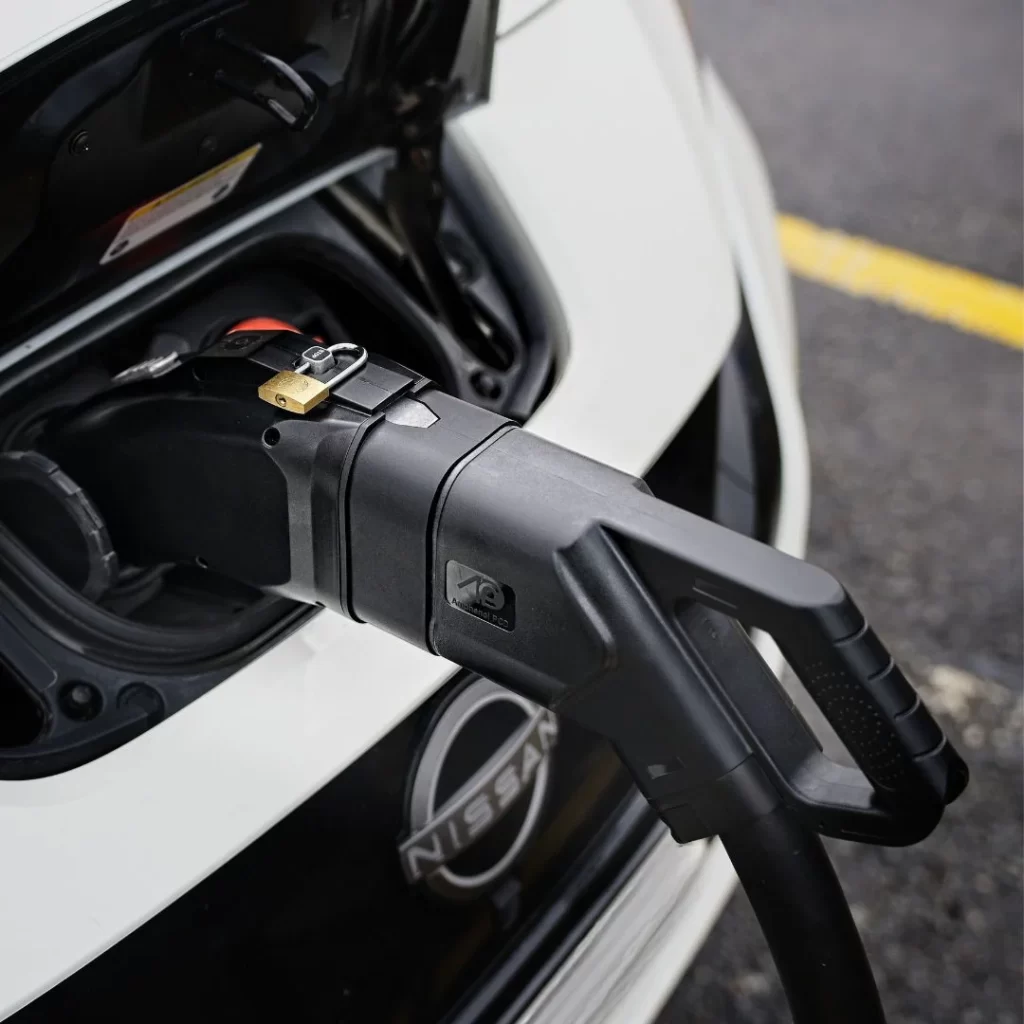
The charging port is another useful detail. It should look like something that has been used normally and cared for, not neglected or damaged. The flap, the contacts, and the general cleanliness around the area can all say something about how the car has been handled.
Then there is the overall feel of the car. A careful owner tends to create a pattern. The interior is not excessively tired. The car starts and behaves normally. The explanations make sense. The small details do not feel ignored.
That kind of consistency matters.
What are the biggest red flags on a used Leaf?
A low bar count without a price that reflects it is one red flag.
A vague seller is another.
If the seller keeps returning to the range estimate instead of answering battery questions directly, that is not a good sign. If they cannot explain service history, battery checks, or even basic maintenance, that matters.
A weak or inconsistent LeafSpy result is another major warning sign. If the deeper battery data looks much worse than the dashboard impression, that should slow the whole deal down.
Unexplained warning lights matter too. So do signs that small but important items such as the 12V battery, brakes, or charging hardware have been ignored.
And then there is mismatch. If the car looks polished, but the ownership story feels thin, or the seller’s confidence seems to depend on you not checking too closely, take that seriously.
How do you put all the signs together before deciding?
Think in layers.
The first layer is what the car shows you immediately. Battery bars, warning lights, general presentation, and basic driving feel.
The second layer is what the records show you. Service history, battery checks, warranty status, and whether the seller has a coherent story.
The third layer is what the deeper diagnostic check shows you. SOH, battery temperatures, cell balance, and whether the deeper data supports the simpler first impression.
A well-maintained Leaf usually looks sensible across all three layers.
That is the key idea.
You are not trying to prove that the car is flawless. You are trying to confirm that it has been cared for consistently enough that the battery, the records, and the general ownership picture all point in the same direction.
Is a used Leaf still worth buying if it is not perfect?
Yes, often it is.
Used EV buying is not about finding a battery that behaves like a brand-new one. It is about finding a car whose battery and overall condition still fit your needs and its asking price.
A Leaf with some capacity loss can still be a very good car for local use, home charging, and predictable daily driving. The problem starts when buyers pay strong money for a car whose condition no longer matches the role they expect it to fill.
That is why spotting a well-maintained Leaf matters so much. It is not about perfection. It is about clarity.
So how do you spot a well-maintained Nissan Leaf before you buy?
Start with the dashboard, but do not stop there.
Use the battery bars as a first filter. Treat the range estimate with caution. Ask for battery-related service records. Check whether the seller can explain the car clearly. If the car is a serious candidate, read the battery properly with LeafSpy and a compatible OBD adapter.
Then step back and look at the whole picture.
A well-maintained Leaf usually feels easy to believe. The signs support each other. The battery health makes sense. The service story makes sense. The condition matches the claim.
That is the kind of used Leaf worth taking seriously before you buy.