A Nissan Leaf can still be a very usable long-distance car in 2026. The important part is understanding what kind of long-distance car it is.
A Leaf is not at its best when you treat it like a newer EV with aggressive thermal management, huge charging buffers, and effortless repeat fast charging all day long. It works much better when the trip is planned around the car’s real strengths and limits.
That is why long-distance driving in a Leaf is less about one headline number and more about knowing how the car behaves once the day gets longer. Battery size matters. Charging strategy matters. Battery temperature matters. Stop selection matters. And in Europe in 2026, access to the right charging network matters more than ever.
If you understand those things, a Leaf can still handle long journeys very well. If you ignore them, the same car can feel much more difficult than it really is.
Can you still drive long distance in a Nissan Leaf in 2026?
Yes, absolutely.
The more honest answer is that it depends on which Leaf you own and how you define long distance.
A smaller-battery Leaf and a larger-battery Leaf do not deliver the same experience on the motorway. A 39 kWh car needs more frequent charging and gives you less flexibility between stops. A larger e+ car gives you more margin, better route options, and a calmer overall experience. That difference matters a lot once the trip stops being local.
But even the bigger question is not just battery size. It is whether the driver understands how the Leaf behaves on a full day of travel.
A long journey in a Leaf usually goes well when the route is built around efficient charging windows, realistic motorway range, and sensible stop spacing. It usually feels slow and frustrating when the driver expects the car to respond like an EV built for repeated maximum-speed DC charging without much planning.
So yes, long-distance driving in a Leaf still works in 2026. It just rewards the driver who understands the car.
What makes long-distance driving in a Leaf harder than many people expect?
Usually, it is not one big problem. It is several small ones adding up.
The first is unrealistic range expectations. A Leaf’s brochure range and its real motorway range are not the same thing, especially in winter, in wet weather, or at sustained high speed. Buyers often understand this in theory, but the practical impact only becomes obvious once they start spacing charging stops too far apart.
The second is charging strategy. Many people still think in terms of “charge as much as possible whenever you stop.” That sounds safe, but it often makes the trip slower. A Leaf road trip is usually faster when charging is built around useful windows rather than full batteries.
The third is battery temperature. This is one of the biggest factors on a long day. Repeated fast charging, high motorway speed, climbing, and warm weather can all raise battery temperature. Once that happens, later charging stops may take longer.
The fourth is infrastructure fit. In Europe in 2026, public fast charging is increasingly shaped around CCS. That does not make a Leaf unusable, but it does mean that long-distance practicality depends more and more on whether you can access enough of the network efficiently.
Why does battery temperature matter so much on longer trips?
Because it affects what happens at the next stop, not just the current one.
Many Leaf drivers already know the feeling. The first fast charge of the day looks fine. The next one is slower. Later in the trip, the car may become more selective about how quickly it accepts power. That is not usually a charger problem alone. It is often the car protecting the battery as heat builds.
This is one of the most important things to understand before taking a Leaf on a long journey. The charging session is not just about the charger and the battery percentage. It is also about the condition the battery is in when you arrive.
A car that reaches the charger cool and low on charge will usually behave differently from one that has just been driven hard at motorway speed for a long stretch and then fast charged several times already.
That is why long-distance Leaf driving is partly about managing heat, even if you never use that phrase while driving. The practical version is simple: a slightly calmer pace and better stop rhythm can reduce total journey time because the charging stays healthier.
What is the best way to charge a Leaf on a long trip?
The best strategy is usually to charge for the next useful leg, not automatically to full.
A Leaf tends to gain useful range fastest in the lower and middle part of the battery. Once the state of charge climbs higher, charging slows down. That means the final part of the session often gives less value for the time spent waiting.
This is why a long-distance Leaf trip usually works better with shorter, smarter charging stops than with a “fill it to 100% every time” approach.
That does not mean you should never charge high. There are cases where it makes sense. If the next charging options are weak, unreliable, sparse, or uncertain, charging higher can be the right decision. But as a normal strategy, staying longer than necessary is often one of the main reasons a Leaf trip feels slow.
A good stop is one that gives you enough margin for the next part of the route without wasting time in the slowest part of the charging curve.
How low should you arrive at the charger?
Lower is usually better, but not recklessly low.
Arriving with a lower state of charge helps you use the fastest part of the charging session. Arriving too early, with too much battery left, usually means you spend more time charging than you needed to.
At the same time, a Leaf trip should not be planned on bravado. Deep reserve driving is not the goal. The goal is to arrive low enough to charge efficiently, while still keeping a practical backup option if the chosen stop is busy or out of service.
That balance matters more than any exact percentage rule.
Drivers sometimes want a single magic number, but what works best depends on traffic, weather, speed, terrain, charger quality, and the next backup stop. The useful principle is simpler than that. Do not stop too early, and do not push so far that one bad charger ruins the whole leg.
Does speed on the motorway change the whole trip more than people think?
Yes.
This is where long-distance Leaf driving becomes a total-time question instead of just a driving-time question.
Driving faster can reduce the time spent moving, but it can also increase energy consumption and battery temperature. That can force an earlier stop, lengthen the charging session, or make later stops slower than they would otherwise be.
This is why the fastest trip is not always the one with the highest cruise speed.
A modest reduction in speed can often help in two ways at once. It stretches the distance between charges and reduces the heat load that would otherwise make the next stop slower. On some trips, that can save more time overall than aggressive driving does.
The lesson is not that long-distance Leaf driving has to be slow. It is that smoothness often beats urgency. If the car arrives in better shape, the whole trip flows better.
How should you choose charging stops in 2026?
Choose stops that fit the whole trip, not just the map.
A good charging stop is not simply the nearest compatible charger. It is a stop that comes at the right point in the route, has decent reliability, gives you a useful next leg, and leaves you with options if something goes wrong.
This is why route planning tools matter so much. A Better Routeplanner is useful because it thinks in terms of actual trip legs. PlugShare and Chargemap are useful because they help you see connector types, location details, and recent user feedback.
The best stop usually has one more advantage: a backup nearby. A single lonely charger at the very edge of your range is much less attractive than a site that gives you alternatives.
That approach reduces stress and wasted time. It also changes the psychology of the trip. Instead of charging whenever anxiety appears, you begin to think in terms of strong stops and weak stops.
Why does overnight charging make such a big difference on a Leaf trip?
Because it improves the next day before the day even begins.
A hotel, destination, or overnight AC charge does not look exciting in a route plan, but it often saves more time than people first realize. Starting the next morning with a full battery and a cooler pack gives you a cleaner first leg and reduces how quickly the day becomes a sequence of public charging stops.
That matters on a Leaf because the car often feels best when the trip begins from a stable starting point rather than from an immediate search for fast charging.
If you are planning a multi-day drive, accommodation charging is not just a convenience feature. It can be one of the best ways to make the whole trip easier.
What changes in Europe in 2026 for Leaf drivers?
The big change is not the Leaf itself. It is the charging environment around it.
Across Europe, CCS has become the default fast-charging standard at more and more sites. CHAdeMO has not disappeared, but it is no longer the connector type around which new long-distance charging infrastructure is being built.
That changes what it means to own a Leaf on longer trips.
The car may still be fine. The battery may still be healthy. The question becomes whether the car can still access enough of the network in a practical way.
This is why long-distance Leaf driving in 2026 is partly an infrastructure story. The experience is shaped not only by how the car charges, but by how many good charging options it can actually use on the route you want to take.
Can a CCS to CHAdeMO adapter make long-distance Leaf driving easier?
Yes, and for many drivers it can make a very meaningful difference.
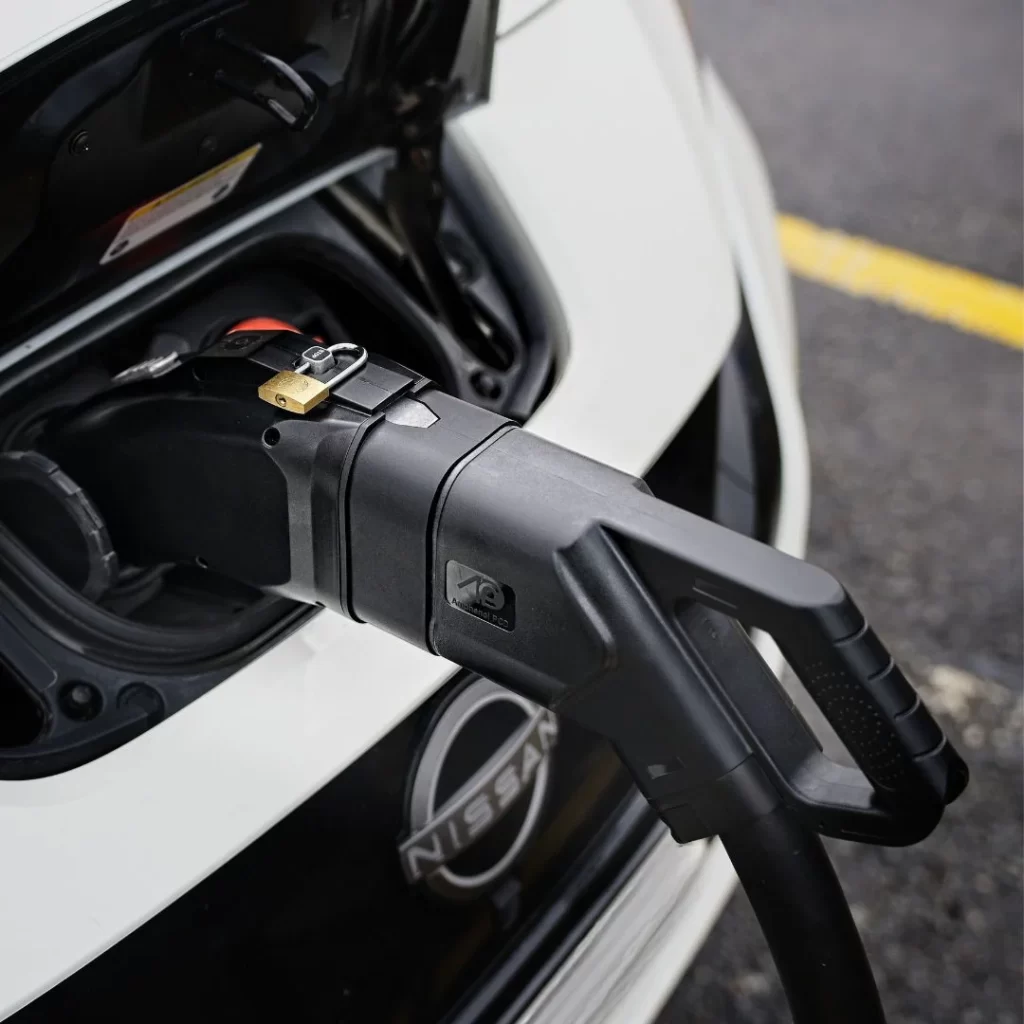
A CCS to CHAdeMO adapter does not turn the Leaf into a different car. It does not remove the car’s own charging limits, and it does not magically fix battery heat. But it can make long-distance driving much easier by opening access to a far larger share of the European fast-charging network.
That matters because a better trip is often about better stop choice, not just higher charging power.
If you can avoid routing your journey around a shrinking number of CHAdeMO points, the trip becomes easier to plan and easier to execute. You get more options, stronger backup plans, and a better chance of reaching a stop that suits the car and the route instead of accepting whatever CHAdeMO point happens to exist nearby.
That is one of the most practical reasons the adapter matters in 2026.
Why does the right adapter matter more than just having an adapter?
Because this is still a charging product, not a novelty item.
A strong long-distance setup depends on more than the connector shape. Buyers need broad real-world compatibility, firmware support, and a seller who understands what happens when specific chargers behave differently over time.
The Longood adapter sold by Autonlaturit.com is relevant here because it has broad proven compatibility across Europe, it has been tested with Nissan Leaf models, and the manufacturer continues improving compatibility when charger-specific issues appear. It also has an open source firmware option supported by independent developers, which gives the product a stronger path forward over time.
What should a Leaf driver focus on most before a long trip?
Not one thing, but one mindset.
Think less about maximum charging speed and more about trip flow.
Make the route fit the car. Start full if you can. Pick stronger stops. Avoid charging too high by habit. Keep some flexibility in hand. Treat battery temperature as part of the plan, not as an afterthought. And if you use a CCS to CHAdeMO adapter, use it to reach better options, not to chase unrealistic power numbers.
A long trip in a Leaf becomes much more pleasant when the day is built around that logic.
Is a Nissan Leaf still a sensible long-distance EV in 2026?
Yes, if you use it on its own terms.
A Leaf is not the easiest EV for every kind of high-speed, high-frequency motorway use. But that is not the same as saying it is a poor long-distance car. It remains a sensible and enjoyable long-distance EV for drivers who understand the charging rhythm, plan around the battery, and make good use of the infrastructure available.
For many owners, the biggest difference-maker in 2026 is not a new trick behind the wheel. It is access. If the car can reach a wider and more practical charging network, the whole ownership experience improves.
That is why long-distance driving with a Nissan Leaf in 2026 is still very workable. You just need to know what kind of trip the car likes best, and build the day around that.