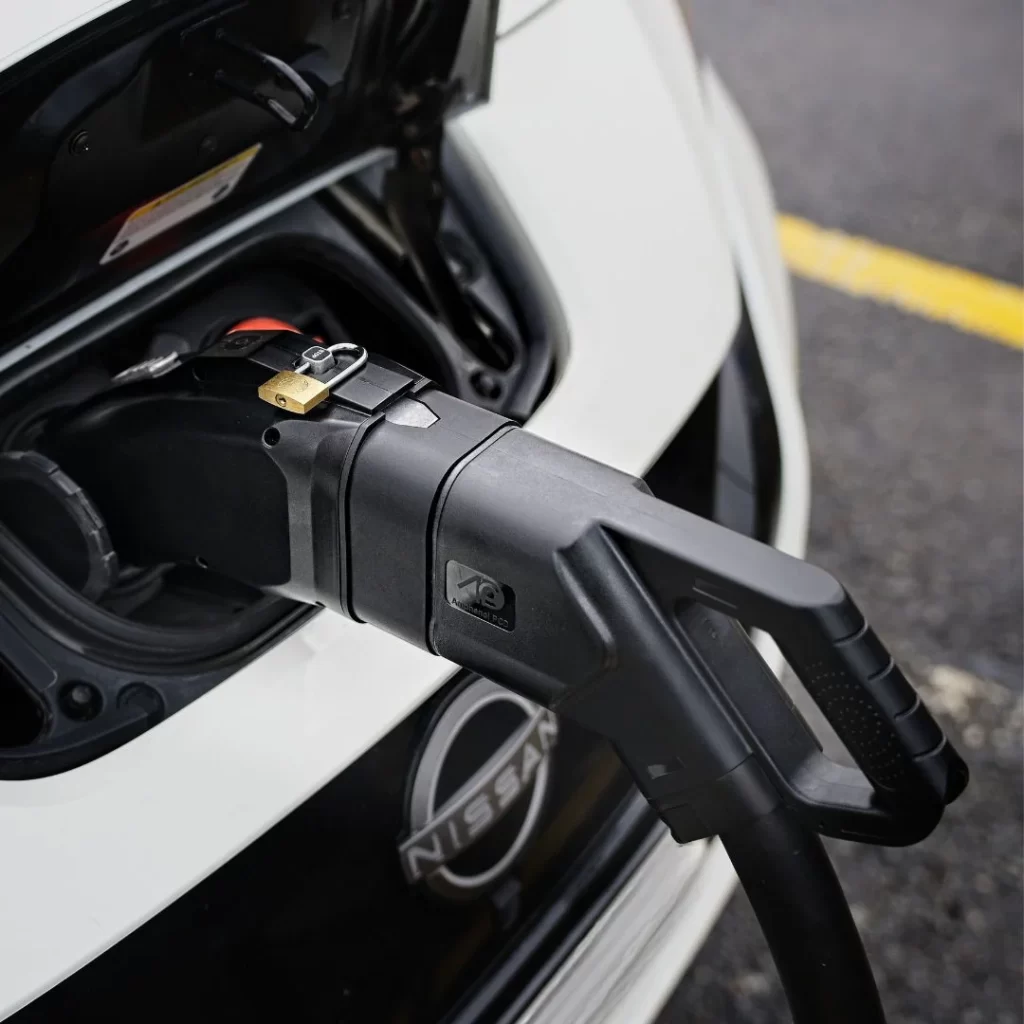
If you drive a CHAdeMO-equipped EV and are considering a CCS to CHAdeMO adapter, one concern tends to come up faster than any other.
Is it safe for the battery?
That is a fair question. Battery health matters more than charging convenience, and nobody wants to save time on the road at the cost of a very expensive repair later.
At Autonlaturit.com, we sell the Longood CCS2 to CHAdeMO adapter, so we understand the concern. People want a larger charging network, but they also want confidence that they are not doing something harmful to the car.
In normal use, a properly designed and compliant CCS to CHAdeMO adapter should not damage your car’s battery simply because it is an adapter. The battery is still protected by the vehicle’s own charging logic and battery management system. The more important safety question is not just whether there is an adapter in the middle, but whether the adapter is well designed, properly supported, and being used as intended.
Is the adapter itself what controls battery safety?
No, not in the way many people imagine.
A lot of drivers picture charging as a simple power flow. Plug in, electricity goes through, battery fills up. But EV charging is not just electricity passing through a cable. The car is still actively involved in deciding what it will accept.
That is why the battery does not suddenly become unprotected just because an adapter is used. The vehicle still has its own systems that monitor charging conditions and keep the battery within safe limits. In other words, a proper adapter is not there to overrule the car. It is there to allow communication and connection between two charging standards so the charging session can happen within the car’s own safety framework.
This is the most important point in the whole discussion, because it changes the question from “does an adapter force unsafe charging?” to “is the adapter doing its job correctly inside the car’s existing charging logic?”
That is a much better question, and it leads to much better buying decisions.
What actually protects your EV battery during fast charging?
If you want a useful mental model, think of the adapter as one part of the path, not the boss of the battery.
The real protection comes from the car’s own battery management and charging control systems. These systems monitor things such as voltage, current, and temperature, and they are there specifically to stop the battery from being charged outside the conditions the vehicle considers safe.
That matters because many fears around adapters come from the idea that the adapter somehow bypasses the car’s protections. A proper CCS to CHAdeMO adapter is not supposed to do that. It is supposed to work with the vehicle’s native charging logic, not around it.
This is also why the quality of the adapter matters so much. A serious product is built around safe communication, correct signalling, and proper protective behavior. A poor product is risky not because “adapters are bad,” but because poorly engineered charging hardware is always a bad idea.
Is the real battery risk actually fast charging heat rather than the adapter?
In many cases, yes.
When people talk about battery safety, they often mix together two different issues. One is whether an adapter is safe. The other is whether repeated DC fast charging is ideal for battery health over the long term.
Those are related, but they are not the same thing.
Fast charging creates more stress than slow AC charging. That is not a secret, and it is not specific to adapters. The biggest battery-health topics are usually heat, charge rate, and how well the car manages temperature during charging. In other words, if someone is worried about long-term battery wear, the more relevant topic is often how the car handles fast charging in general, not the simple fact that an adapter is present.
That is an important distinction because it keeps the article honest. A good adapter should not be framed as some magical source of battery damage. At the same time, it is also fair to remind readers that DC fast charging is still a more demanding charging method than slower charging, especially if done very frequently.
The practical takeaway is simple. If your car already supports CHAdeMO DC fast charging, then the bigger battery-health discussion is usually about fast charging behavior and battery temperature, not about the existence of a compliant adapter by itself.
Does a CCS to CHAdeMO adapter bypass the car’s own charging logic?
This is one of the most important questions people ask, and it should be answered plainly.
A proper CCS to CHAdeMO adapter should not bypass the vehicle’s own charging logic. That is exactly why adapter quality matters so much. The adapter’s role is to make the charging session possible between two different standards, not to override the rules the car sets for safe charging.
If an EV limits charging power because of battery temperature, battery state of charge, or other protective factors, the existence of an adapter does not change the fact that the car remains responsible for accepting or refusing those conditions.
That is also why it is not helpful when some online discussions reduce the topic to “extra hardware equals extra danger.” In charging, the more meaningful distinction is this: well-engineered, well-supported hardware versus unknown hardware with unclear design and unclear safety behavior.
Why does adapter quality matter so much if the car still protects itself?
Because the adapter still has to behave correctly.
The car may be protecting the battery, but the charging session still depends on the adapter communicating properly and handling the connection safely. If an adapter is poorly made, badly documented, or unsupported, that creates unnecessary risk and uncertainty.
This is where buyers often make the wrong comparison. They compare adapters mainly by price or by a few visible specs. In real life, the things that matter more are often less flashy: how mature the firmware is, whether the product has been used in the field, whether support exists if something changes, and whether the manufacturer keeps compatibility up to date.
A proper adapter is not just a piece of molded plastic with connectors on both ends. It is a charging product that sits in a safety-relevant role. That alone is a good reason to treat it more like charging equipment and less like a generic accessory.
Can a poor-quality adapter cause problems even if the battery is protected?
Yes, and this is where the discussion needs some nuance.
Saying that a proper adapter should not damage the battery is not the same thing as saying every adapter on the market deserves the same trust.
A poor-quality or badly supported adapter can create all kinds of problems even if the car’s battery protections remain in place. Charging sessions may fail. Handshakes may behave inconsistently. The adapter may be more vulnerable to overheating or communication errors. Firmware may not get updated when real-world compatibility changes. Support may disappear the moment you actually need help.
That does not automatically translate into battery damage, but it absolutely affects safety, reliability, and confidence.
This is an important expert point because it avoids two bad extremes. It avoids the lazy claim that “all adapters are dangerous,” and it also avoids the equally lazy claim that “an adapter is an adapter, so just buy the cheapest one.”mentation matter more than many drivers think?
Why do CE marking and product documentation matter more than many drivers think?
When people shop for charging accessories, they sometimes treat CE marking, technical documentation, and product information as boring details. In this category, they are not boring.
They are one of the clearest signals that the product is being sold as real charging hardware rather than as a vague workaround.
Clear compliance information, proper technical documentation, update instructions, product support, and realistic compatibility guidance all point in the same direction. They suggest that the seller understands the product as something that must work safely and predictably in the real world.
This also matters because adapters live in a space where buyer trust is fragile. Drivers are connecting high-value vehicles to high-power chargers. They want to know what the product is, how it is supported, and what happens if compatibility changes later.
That is why support and firmware updates are not side issues. They are part of the safety story.
Why do firmware updates matter for battery safety and not just compatibility?
Most people first hear about firmware updates in the context of compatibility. A charger network changes behavior, and then an adapter update is needed so charging works smoothly again.
That is true, but firmware matters for another reason too.
It shows whether the product is actively maintained.
When charging infrastructure evolves, the safest long-term products are the ones that are not frozen in time. A firmware-updatable adapter is easier to keep aligned with the changing real world. That does not mean every update is about battery danger. Most are about compatibility and communication. But support and updateability are still part of what makes an adapter a trustworthy charging product rather than a dead-end gadget.
Is a failed charging session the same thing as a battery safety issue?
No, and this distinction deserves more attention.
A failed charging session can be frustrating, especially on a trip. The charger refuses to start, communication times out, or the session stops unexpectedly. But that is not the same claim as saying the battery was in danger.
Compatibility issues and battery safety issues are not identical.
This is a helpful point for readers because people naturally jump from “something went wrong” to “this must be harmful.” In practice, a handshake problem, a charger-specific compatibility issue, or a firmware mismatch may stop charging altogether without telling you anything dramatic about battery damage.
That does not mean problems should be ignored. It means they should be described accurately.
What should buyers look for if battery safety is their biggest concern?
If battery safety is the top concern, the best buying criteria are not mysterious. Look for a product that is designed for the correct regional charging standard, sold with clear compliance information and supported by firmware updates and responsive help.
It is also smart to choose a seller that is willing to discuss compatibility openly instead of making unrealistic claims. That kind of honesty usually tells you more than polished marketing language.
For a CHAdeMO driver in Europe, the basic checklist is straightforward. You want a CCS2 to CHAdeMO adapter intended for European CCS2 fast chargers. You want a product with clear product information and a realistic support path if questions come up later.
At Autonlaturit.com, that is one of the reasons we focus so much on guidance and support around the Longood CCS2 to CHAdeMO adapter. People do not just want a device. They want confidence in how it fits into real charging use.
Why does this question matter so much for CHAdeMO drivers right now?
Because the charging landscape keeps moving toward CCS, while many existing CHAdeMO drivers still want to keep their cars practical for years to come.
That makes the adapter discussion bigger than a simple product question. It becomes part of a broader ownership question.
Can I keep using this car comfortably?
Can I access more modern charging infrastructure?
Can I do that without gambling with battery health?
Those are serious questions, and that is why the answer must be grounded. The best response is neither fear-based nor dismissive. It is realistic.
If the adapter is a serious, compliant product and the car’s native charging protections remain in control, then the battery-safety concern becomes much more manageable than many people first assume.
What is the bottom line on battery safety?
If you want the shortest useful answer, it is this.
A properly designed CCS to CHAdeMO adapter should not be unsafe for your car’s battery simply because it is an adapter. The vehicle still manages charging conditions and protects the battery through its own systems. The real difference between a reassuring product and a worrying one is not whether an adapter exists, but whether the adapter is well engineered, compliant, supported, and maintained.
That is why the smartest way to evaluate battery safety is not to ask only, “Is an adapter safe?”
Ask instead:
Is this adapter built and supported like real charging equipment?
Is it intended for my charging standard and region?
Does it work with the car’s native charging logic rather than trying to bypass it?
Can it be updated and supported as charging infrastructure changes?
Those are better questions, and they lead to better outcomes.
For most readers, that is also the most reassuring conclusion. Battery safety is not based on wishful thinking. It comes from proper vehicle protections, proper product design, and proper support. When those three pieces are in place, a CCS to CHAdeMO adapter can be a very practical way to expand charging access without turning battery health into a guessing game.