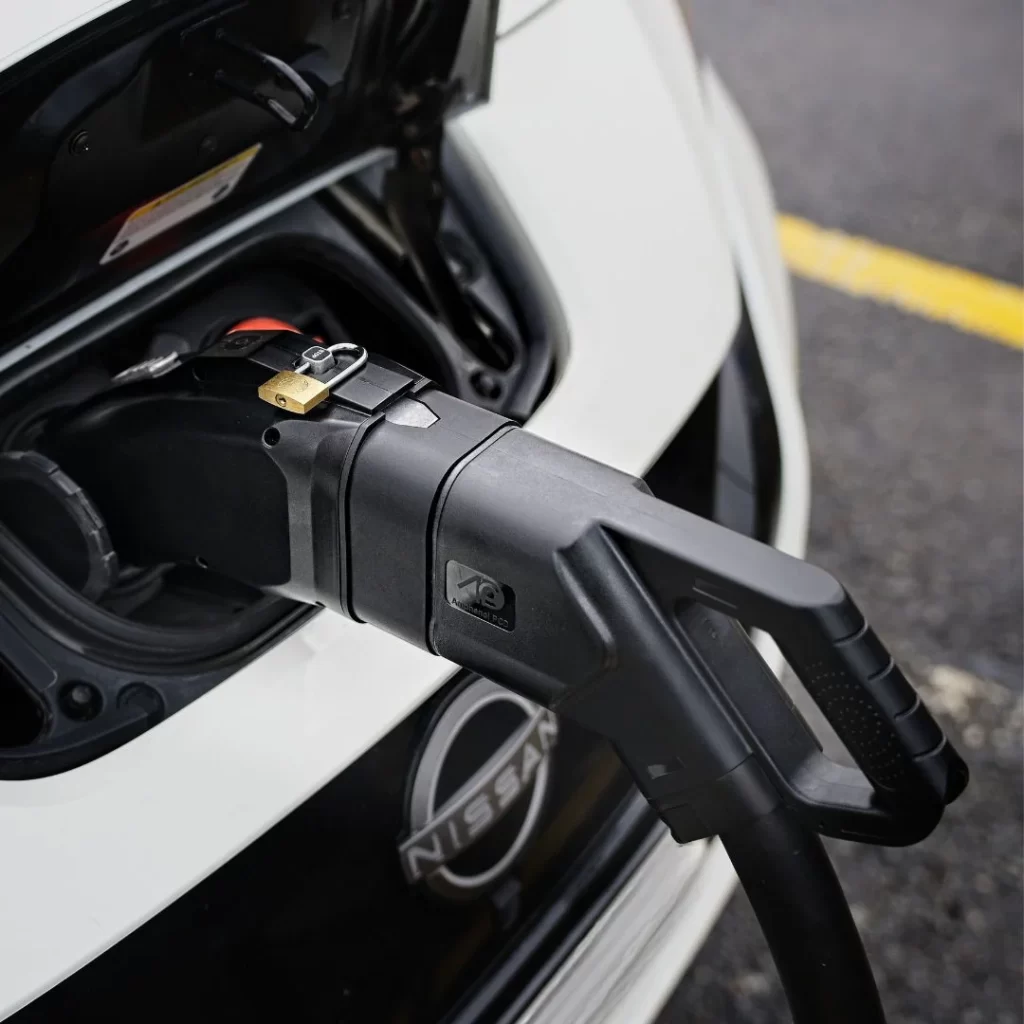

Resale value is mostly created long before you take photos for the listing. A Nissan Leaf that feels predictable, easy to charge, and well looked after will always sell more easily than one that looks fine but raises doubts the moment a buyer asks about the battery.
In 2026, the Leaf sits in a very specific place in the used EV market. It is a proven, widely understood electric car. At the same time, the market is increasingly sensitive to battery condition and charging convenience. That means value is protected by two things: keeping the car genuinely usable, and making it easy for the next owner to trust what they’re buying.
This guide is about practical habits that protect that value without turning your life into a battery science project.
What actually determines a Leaf’s resale value in 2026?
Most buyers decide what a Leaf is worth based on a few simple questions.
Can it do my everyday driving without drama? Can I charge it in the way I prefer, ideally at home or work? Does the battery behave consistently and does the car feel like it has been cared for?
Mileage, trim and paint condition still matter, but in a Leaf the battery is the main asset. Two Leafs can look the same on paper and still feel like different cars if one has noticeably less usable range, inconsistent charging, or a history that is hard to verify.
There is also a “confidence premium” in the used EV market. Buyers will pay more when the seller can show the basics clearly: the battery indicators, a normal charging routine, and a clean service and campaign story.
What battery habits help protect value over time?
The Leaf does not need special rituals, but it does reward sensible routines.
A practical goal is to avoid living at extremes. Regularly running the battery very low and leaving it there for long periods is not a great idea. Likewise, constantly charging to full and leaving it parked full for long stretches is rarely necessary for day-to-day life.
The easiest value-friendly habit is to charge in a way that fits your actual routine.
If you have home or workplace charging, top up as needed and avoid making every charge a “full charge” just because you can. For most people, having some buffer is enough.
If you use DC fast charging, treat it as a tool rather than a default. It is fine to use when you need it. It simply should not be the only way the car ever gets energy, especially if you want the battery to stay as predictable as possible for the next owner.
These habits are not about chasing perfection. They are about keeping the battery in the kind of everyday state where it behaves calmly and consistently.
How should you store a Leaf if it’s not driven regularly?
Storage is where resale value can quietly leak.
If the car will sit for a while, avoid leaving it at an extremely low state of charge. A Leaf that sits close to empty for a long period can end up feeling “off” when it’s brought back into use, and it raises buyer concerns immediately.
For normal short breaks, there is nothing special to do beyond keeping a sensible amount of charge and checking the car occasionally.
For longer periods, treat it like you would any vehicle you care about. Keep it clean, keep the 12V battery healthy, and keep the main battery at a reasonable level so the car can manage itself normally.
If you live in a region with harsh winters, storage and charging access matters even more. You do not need to be technical about it. You simply want to avoid a situation where the car sits outside for long periods in extreme cold with no way to plug in.
How do recalls and service campaigns protect resale value?
A recall or service campaign is not only a safety issue. It is a trust issue.
The used buyer wants to know that the car is up to date and that there are no unresolved manufacturer actions hanging over it. Even if a campaign is small, the buyer sees it as a possible hassle.
A practical habit is to do a VIN-based check before you list the car, and keep proof of what you found and what was completed. Many buyers will ask, and being able to answer confidently removes friction.
Service campaigns also matter because they can affect what the car reports. In the Leaf market, there have been cases where a software update changed how capacity or range was displayed. The important point for resale value is not the technical reason. It is that keeping the car updated helps ensure the information the buyer sees matches reality as closely as possible.
If you sell a Leaf and the buyer later discovers that key updates were missing, trust collapses. If you can show that updates and campaigns were handled when applicable, your listing feels safer.
How can you document battery condition in a way buyers trust?
Battery condition is where many Leaf listings either build confidence or lose it.
The mistake is to make big claims. “Battery is perfect” does not persuade anyone. It usually triggers skepticism.
The better approach is simple documentation.
Start with what the car shows. Provide clear photos of the instrument cluster that include the capacity indicator and the current state of charge. Take the photo when the car has been driven normally, not immediately after a short downhill trip or a weird week of driving.
Then add context. Buyers value a short, honest description of how the car is used.
For example:
- mostly charged at home on AC
- occasional fast charging on road trips
- typical daily mileage range
That kind of information is not technical, but it gives the buyer a mental model.
If you want to go a step further, provide a health readout from a widely recognised diagnostic method. Many Leaf buyers are familiar with LeafSpy readings. You do not need to interpret every number for them. The point is to show that you are not hiding the battery story.
The goal is to make the buyer feel that the car’s battery condition is measurable and transparent.
Why do Leaf capacity bars matter in negotiations?
Leaf buyers talk about capacity bars because they are visible and easy to compare.
Capacity bars are not the entire story, but they are a quick proxy for whether the car still feels like it has “full usability” or whether it is clearly in a reduced-range category.
They also matter because Nissan has historically referenced capacity indicators in battery capacity warranty terms in some markets. That gives the gauge extra weight in buyer conversations.
For resale value, you do not need to argue about what each bar means. You simply need to show the indicator clearly and avoid trying to spin it. If the bars look strong, that helps the sale. If they look reduced, the right move is honesty and pricing that matches the car’s role.
What should you do to avoid test-drive friction?
A Leaf can lose value in the first ten minutes of a test drive if the buyer experiences anything that feels “electrical” or unpredictable.
The best way to prevent that is to remove small sources of anxiety.
Start with the 12V battery. Even though the Leaf does not crank an engine, the 12V system still powers many control systems. A weak 12V battery can create odd warnings, slow wake-ups, or strange behaviour that a buyer will interpret as expensive EV trouble. Keeping the 12V battery healthy is a small cost that protects buyer confidence.
Then focus on comfort systems, especially in winter markets. Heating and defrost performance affects whether the car feels suitable for everyday life. If the heat is weak or inconsistent, buyers will fear winter range issues and comfort problems at the same time.
Finally, make charging look easy.
If you can, demonstrate that AC charging works normally. If DC fast charging matters for the buyer in your region, it is valuable to have recent proof that it works reliably. Buyers do not want to hear “it should work”. They want to see that it does.
None of these steps are complicated. They are simply the things that prevent a buyer from imagining worst-case scenarios.
How does the EU charging landscape in 2026 affect Leaf resale value?
The Leaf’s DC fast charging connector is part of the resale equation.
In the EU, the direction of travel for public DC infrastructure is clearly oriented around CCS2. Many new public fast-charging sites are built primarily for CCS2 vehicles.
The Leaf uses CHAdeMO for DC fast charging. That means the used buyer is not only buying the car, but also buying into a connector ecosystem.
For some buyers, that is a non-issue. If they charge at home and only use public DC occasionally, a Leaf can be a great value EV.
For other buyers, especially those who rely on public fast charging, it becomes a key question. They will look at their routes and ask whether CHAdeMO options are convenient, whether sites have multiple connectors, and whether they will often be waiting for a single plug.
As a seller, you do not need to argue about infrastructure. You just need to acknowledge it and show that you understand what charging looks like in your area. A listing that can say, calmly and factually, how the car is charged and what the buyer can expect will feel more trustworthy than one that ignores the topic.
Tip: include a CCS2 to CHAdeMO adapter in the sale
If you’re selling a Leaf and you already own a CCS2 to CHAdeMO adapter, including it with the car can make the listing more attractive. It can improve the buyer’s day-to-day experience by expanding the number of fast-charging locations they can realistically use. In a market where many new DC sites are CCS2-focused, that extra flexibility can reduce buyer hesitation and help you justify a cleaner price.
What should you write in your listing to justify a higher price without overclaiming?
If you want a strong price, your listing needs to feel like a low-risk purchase.
That does not come from marketing language. It comes from clear evidence.
Include simple, verifiable items:
- a clear photo of the instrument cluster showing the capacity indicator
- a short description of typical charging habits
- confirmation that the car has a clean campaign and recall status, and that any applicable actions were completed
- proof that both charging ports work as expected, if relevant
- if the sale includes a CCS2 to CHAdeMO adapter, mention it clearly and include the model
If you have a diagnostic battery health readout, include it as an optional bonus. Do not oversell it. Just present it.
Also keep the story consistent. If you claim the car is “mostly home charged”, your photos and overall condition should match a cared-for daily driver. If you claim “rarely fast charged”, avoid vague language and keep it as a simple statement rather than a promise.
The goal is to make the buyer feel that you know what matters and that you are not hiding the one thing that would change the price.
What claims should you avoid if you want to stay factual?
Overclaiming is the fastest way to damage trust.
Avoid precise battery percentage promises unless you have a documented measurement and you are prepared to show it. Avoid making firm predictions about future degradation. Avoid claiming a specific winter range or a guaranteed fast charging speed.
The right tone is confident but bounded.
You can say the car is predictable in your use. You can say how you charge it. You can show the indicators. You can show recent charging proof.
Buyers respect that. They distrust sellers who write like a brochure.
Can charging access upgrades protect resale value alongside battery health?
Battery condition is the main driver, but charging convenience is the second story that buyers care about more every year.
If you can help a buyer feel that the Leaf will remain easy to charge in 2026, you remove another reason for discounting.
One option that some Leaf owners consider is a CCS2 to CHAdeMO adapter. An adapter does not improve battery health and it does not change how the Leaf manages charging. What it can do is expand the number of public fast chargers the car can use, which can make the car feel less limited in a CCS2-heavy environment.
That matters for resale value because many buyers are not looking for maximum speed. They are looking for fewer dead ends in route planning.
If you want to explore that option, we sell the Longood CCS2 to CHAdeMO adapter at Autonlaturit.com. The product page in our store includes the practical details buyers usually ask about, such as compatibility notes and usage expectations.
What are the simplest steps you can take today to protect Leaf resale value?
The best resale strategy is a calm routine.
Charge sensibly and avoid extremes when it is easy to do so. Keep the car updated and keep records. Keep the 12V battery and comfort systems in good shape. Make charging easy to demonstrate.
Then, when it is time to sell, focus on proof rather than persuasion.
A Leaf with an honest, well documented battery story sells faster, attracts more serious buyers, and holds its value better than a Leaf that forces buyers to guess.
What is the bottom line for maintaining Leaf resale value in 2026?
Resale value is protected by usability and trust.
Usability comes from a battery that still fits real routines and a charging setup that makes sense. Trust comes from documentation, campaigns being up to date, and a seller who avoids overclaiming.
Do those things consistently, and you will not only protect your Leaf’s resale value. You will also make the ownership experience simpler for yourself and for the next owner.