If you have ever tried to buy or sell a used Nissan Leaf, you have probably noticed that two cars can look identical on paper and still attract very different prices. The difference usually comes down to battery condition.
In a petrol car, the engine and gearbox are the big unknowns. In an EV, the battery is the main asset. It defines the car’s practical range, it influences charging behaviour, and it determines whether the car still fits someone’s routine without compromises.
This article explains how battery health affects Leaf resale value in the real world, how buyers actually think about “good” and “bad” batteries, and what you can do as a seller to protect value without making risky claims.
Why does battery health matter so much for Leaf resale value?
Battery health is the Leaf’s utility in a single concept. A Leaf with a healthy battery is simply more useful.
Buyers know this, even if they do not speak in technical terms. Most used EV shoppers are not looking for a chemistry lesson. They want to know whether the car will do their commute in January, whether it can handle a surprise detour, and whether the range they see today will still be acceptable in two years.
That is why battery health affects resale value more directly than it does in many other EVs. The Leaf has been sold for long enough that a wide spread of battery condition exists on the used market, especially on older models. This makes battery condition the most important differentiator once you move past basic “does it run and charge?” checks.
What do buyers actually mean when they say “battery health”?
Battery health is not a single measurement in everyday conversation. Most people use it as shorthand for three questions.
First, how much usable capacity is left? This is the simplest version: how far can the car realistically go between charges.
Second, how does the car behave when charging and driving? Two batteries with similar capacity can still feel different if one has higher internal resistance or a larger imbalance between cells. In practice, this can show up as more aggressive power tapering, more heat sensitivity, or a range estimate that swings wildly.
Third, is the battery situation predictable? Buyers are willing to accept shorter range if they can trust it. What scares them is uncertainty: a car that sometimes drops range quickly, has inconsistent fast charging, or produces warning messages that are hard to interpret.
A good battery story for resale value is therefore not only “it has X km of range on the dash.” It is “this Leaf’s battery behaves consistently, charges normally, and matches what most owners would expect for its age.”
How does battery health change the Leaf’s real‑world usability?
The impact shows up in the boring parts of ownership.
With a stronger battery, you charge less often. That sounds obvious, but it changes habits. A Leaf that needs charging every day can feel demanding if you do not have easy home charging. A Leaf that can comfortably go several days between plugs feels much more like a normal car.
Battery health also affects winter comfort. In cold climates, range margin is not just about the commute. It is also about heating, snow, headwinds, and slower charging. A battery with less remaining capacity means each winter penalty takes a larger slice of your usable range. That pushes a car from “easy” to “requires planning” faster.
For public charging, battery health influences how flexible the car is. If you have less usable range, you rely more on public chargers, and then connector availability becomes more important. This is why buyers who do not have home charging care about battery health even more than buyers who do.
How do Leaf “capacity bars” and warranty concepts influence pricing?
One reason the Leaf market talks so much about battery health is that Nissan has used a visible capacity gauge for years. Many buyers know to look at it, and many sellers mention it because it is an easy way to communicate “good battery” without complex tools.
It is also relevant because Nissan’s battery capacity warranty language has historically referenced the capacity indicator. The details vary by market and model year, so it is not smart to promise anything in an advert. But the concept matters: buyers know that capacity is not only a personal preference, it is something the manufacturer has treated as measurable and meaningful.
In pricing terms, a Leaf that visually signals “strong capacity” will often sell faster and at a higher price than a similar car that signals “noticeable loss.” Not because buyers enjoy counting bars, but because bars are a proxy for usability.
If you are selling, the honest approach is to show the capacity indicator clearly and let buyers interpret it. If you are buying, treat it as a first filter, not as the whole story.
What documentation helps a seller defend a higher resale price?
Used EV buyers pay more when they feel they are buying certainty.
The best way to create that certainty is to document battery condition in a way that is easy to understand and easy to verify.
Start simple. Provide a clean photo of the dash showing the capacity indicator and state of charge. Provide a realistic description of how the car is used. “Mostly charged at home on AC” tells a buyer something. “Fast charged daily” also tells a buyer something.
If you want to go one step further, provide a battery health readout from a reputable diagnostic method. Many Leaf buyers recognise LeafSpy screenshots and know what to look for, even if they are not technical. If you are comfortable doing it, that is one of the most effective ways to reduce buyer hesitation.
Finally, show that you have treated the car like an EV, not like a gadget. A basic service history, proof that software updates and campaigns were handled when required, and a clean story about winter storage all contribute to a buyer’s trust.
This is the practical resale point: buyers do not only pay for battery capacity. They pay for a battery story that looks responsible and transparent.
What should a buyer check before paying a premium for “good battery health”?
If you are shopping for a Leaf and a seller is asking a premium, you want to confirm that the premium is backed by something tangible.
First, check consistency. The car should charge normally, drive normally, and show predictable state of charge behaviour. A short test drive is not enough to prove a battery is great, but it can reveal obvious red flags.
Second, verify charging works in the way you need. If you plan to use DC fast charging, test it. Do not accept “it should work” as proof. Charging behaviour is a big part of the ownership experience, and it is also an area where Leaf owners have very different experiences depending on how the battery behaves.
Third, treat the range estimate on the dash as a hint, not as evidence. It is influenced by recent driving and conditions. Buyers who over‑trust the dash number often get disappointed later.
If you can, ask for a diagnostic health readout. If you cannot, at least compare what you see in person with what you would expect from that model and that age. If something feels off, there is usually a reason.
How can software updates and measurement quirks affect perceived battery health?
This is an easy area for misunderstandings.
The Leaf market has seen cases where battery capacity reporting was affected by software, and updates changed what the car reported. The key resale lesson is not the specific technical details. It is that “what the car reports” is not always the same as “what the battery is.”
For buyers, this means you should be cautious about making conclusions from a single number or a single photo. For sellers, it means you should avoid claims like “this battery is definitely X percent” unless you can support it with a trustworthy diagnostic method.
If you are looking at a Leaf that seems unusually weak or unusually strong compared to similar cars, the right next step is not argument. It is verification: check whether all relevant updates were applied and use a diagnostic readout if possible.
How do charging habits and temperature history influence long‑term value?
Battery health does not degrade only from time. How the car was used matters.
A Leaf that lived most of its life doing short commutes and charging on AC will often feel different from a Leaf that spent years doing long motorway days with frequent DC fast charging. Heat and high power use are part of battery life in general, and the Leaf’s design choices make temperature management a meaningful factor in how the car behaves over time.
That does not mean “fast charging is bad” in a moral sense. It means that used buyers should ask basic questions about the car’s history and not treat two identical model years as interchangeable.
If you are selling, it is worth stating your typical charging routine honestly. If you are buying, it is worth asking. This is one of the few questions that can explain a big price difference between two cars that otherwise look similar.
How should you price a Leaf with lower battery health without scaring buyers away?
The worst way to sell a Leaf with lower battery health is to pretend it is not a factor. Buyers will discover it quickly, and it will destroy trust.
The better way is to frame the car for the use case it still fits well.
A Leaf with reduced capacity can still be a great second car, a city commuter, a school‑run machine, or a home‑charging daily driver. Buyers who need exactly that are not looking for maximum range. They are looking for a predictable, affordable EV.
So instead of competing with the “best battery” cars on the market, position the car honestly. Show the battery indicator, describe realistic use, and price it so the buyer feels the trade‑off is fair.
This does not only protect the sale. It protects the Leaf’s reputation. The used EV market moves faster when expectations are correct.
Can charging access upgrades affect resale value alongside battery health?
Battery health is the biggest variable, but it is not the only one that affects how useful a Leaf feels.
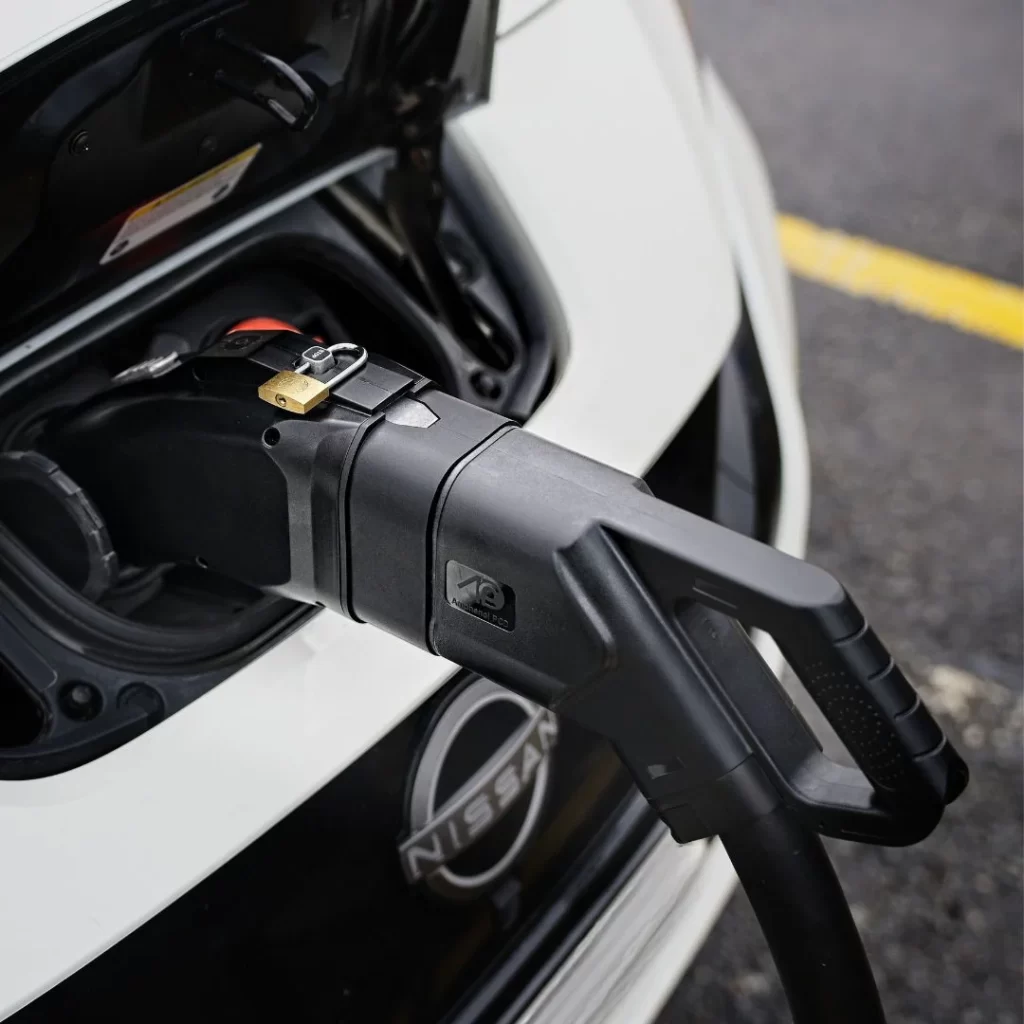
In 2026, charging access is an increasingly important part of the story because the Leaf uses CHAdeMO for DC fast charging. In many regions, the public fast-charging world is increasingly built around CCS.
This is where a CCS2 to CHAdeMO adapter can matter. It does not change battery capacity. It does not change how the Leaf manages charging. But it can change how easy the car is to live with on public chargers by expanding the number of places you can realistically charge.
From a resale perspective, that matters because a buyer is not only buying the battery. They are buying the car’s ability to stay convenient in the current charging landscape. A Leaf with clear battery health documentation plus a clear path to modern charging locations can be easier to sell than a Leaf that feels boxed into a shrinking connector ecosystem.
If you want to explore that option, we sell the Longood CCS2 to CHAdeMO adapter at Autonlaturit.com, with specs and compatibility notes in our online store. For many Leaf owners it is a practical add‑on that improves day‑to‑day flexibility rather than raw charging speed.
So how much does battery health really matter for Nissan Leaf resale value?
It matters a lot, because it controls the two things used EV buyers care about most: usability and uncertainty.
A Leaf with strong battery health is worth more because it fits more routines with less planning. A Leaf with documented battery health is worth more because buyers trust what they are buying.
If you are buying, pay for certainty, not for promises. If you are selling, document the battery honestly and make it easy for a buyer to believe you.
That approach does not just protect resale value. It makes the whole used EV market work better, one Leaf at a time.