The CHAdeMO charging network is shrinking in Europe because CCS has become the dominant standard, leading charging station operators to prioritise CCS infrastructure over CHAdeMO. This shift reflects automaker decisions to adopt CCS for new electric vehicles, policy support favouring CCS, and the economics of maintaining multiple charging standards. For CHAdeMO vehicle owners, this means fewer fast-charging options at public stations, though practical solutions exist to maintain charging convenience.
What is CHAdeMO and why was it once the dominant charging standard?
CHAdeMO is a fast-charging standard developed in Japan that enables rapid DC charging for electric vehicles. Created through collaboration between Tokyo Electric Power Company, Nissan, Mitsubishi, and other Japanese companies, CHAdeMO became the first widely deployed fast-charging technology in Europe and globally. The name combines “CHArge de MOve” with a play on the Japanese phrase “ocha demo ikaga desuka” (shall we have a cup of tea?), reflecting the short charging times it enabled.
When CHAdeMO launched in 2010, it offered a significant advantage over existing charging solutions. The standard supported charging speeds up to 62.5 kW initially, which was revolutionary at the time. Early electric vehicles like the Nissan Leaf, Mitsubishi i-MiEV, and Kia Soul EV adopted CHAdeMO connectors, making it the de facto fast-charging standard in the early years of electric vehicle adoption.
CHAdeMO’s early market position was strengthened by Nissan’s success with the Leaf, which became one of the world’s best-selling electric vehicles. As Nissan expanded Leaf sales across Europe, charging networks installed CHAdeMO connectors to serve these vehicles. By 2012-2014, CHAdeMO was the most common fast-charging standard at European charging stations, with thousands of charging points deployed across the continent.
Why is the CHAdeMO charging network shrinking in Europe?
The CHAdeMO charging network is declining in Europe because CCS (Combined Charging System) has become the European standard, backed by European automakers, policymakers, and charging infrastructure operators. This shift began around 2013 when European and American manufacturers developed CCS as an alternative to the Japanese CHAdeMO standard. European Union policy decisions increasingly favoured CCS, particularly through infrastructure funding programmes and regulatory frameworks.
Automaker decisions have been the primary driver of this change. Volkswagen, BMW, Mercedes-Benz, and other European manufacturers adopted CCS exclusively for their electric vehicles. Even Japanese manufacturers shifted strategy, with Nissan announcing that its Ariya model would use CCS instead of CHAdeMO. This left CHAdeMO primarily serving older Nissan Leaf models and a handful of other vehicles no longer in production.
The economics of maintaining multiple charging standards have accelerated the decline. Charging station operators face significant costs installing and maintaining equipment for different standards. Each charging stall requires space, electrical infrastructure, and ongoing maintenance. When CCS vehicles vastly outnumber CHAdeMO vehicles at a location, operators naturally prioritise CCS infrastructure. Many stations have removed CHAdeMO connectors during upgrades or replaced them with additional CCS charging points to serve more customers.
Regional variations exist, with some countries maintaining better CHAdeMO coverage than others. Norway, which has a large population of older Nissan Leaf vehicles, has retained more CHAdeMO infrastructure. However, even in markets with historically strong CHAdeMO support, new charging installations predominantly feature CCS connectors only.
What’s the difference between CHAdeMO and CCS charging standards?
CHAdeMO and CCS differ fundamentally in their technical design and communication protocols. CHAdeMO uses a dedicated connector exclusively for DC fast charging, whilst CCS combines AC and DC charging into a single connector design. The CHAdeMO connector is round with multiple pins, whereas the CCS2 connector (used in Europe) extends the Type 2 AC connector with two additional DC pins below.
Charging speeds represent another key difference. Original CHAdeMO supported up to 62.5 kW, with later versions reaching 200 kW and the CHAdeMO 3.0 specification promising 500 kW. CCS initially offered similar speeds but has scaled more rapidly, with many European CCS chargers now delivering 150-350 kW. The newest ultra-fast CCS chargers can provide up to 400 kW, though actual charging speeds depend on vehicle capabilities.
The communication protocols differ significantly in complexity. CHAdeMO uses a relatively straightforward CAN bus communication system between the vehicle and charger. CCS employs a more complex protocol called ISO 15118, which enables advanced features like Plug & Charge (automatic authentication and payment). This complexity initially made CCS more challenging to implement but has enabled better integration with modern charging networks.
Geographic adoption patterns clearly distinguish the standards. CHAdeMO dominated Japan and had strong early adoption in Europe, whilst CCS became standard in Europe and North America. Asian markets remain divided, with Japan favouring CHAdeMO whilst China developed its own GB/T standard. Most new electric vehicles sold in Europe now use CCS exclusively, regardless of manufacturer origin.
How does the CHAdeMO decline affect Nissan Leaf and other CHAdeMO vehicle owners?
The CHAdeMO decline creates practical challenges for Nissan Leaf and other CHAdeMO vehicle owners, primarily through reduced charging station availability and increased trip planning requirements. Whilst CHAdeMO chargers remain available at many locations, the density of charging options has decreased compared to CCS. This particularly affects long-distance travel, where drivers may find fewer charging alternatives along their routes.
Trip planning requires more attention than for CCS vehicle owners. CHAdeMO drivers need to verify charger availability before long journeys and identify backup charging locations. Some motorway service areas that once offered CHAdeMO have replaced these chargers with CCS-only installations. This doesn’t make long-distance travel impossible, but it does require more careful preparation and potentially longer routes to ensure charging access.
Vehicle resale value may be affected by charging infrastructure availability. Potential buyers considering used CHAdeMO vehicles naturally evaluate whether the charging network will meet their needs. However, this impact varies significantly by region and use case. For drivers who primarily charge at home and use public fast charging occasionally, the reduced CHAdeMO network may have minimal practical impact.
Regional variations in CHAdeMO infrastructure support mean experiences differ considerably across Europe. Some countries and regions maintain robust CHAdeMO networks, whilst others have seen more dramatic declines. Urban areas generally retain better CHAdeMO coverage than rural regions, as higher charging station density means more options remain available even as some locations remove CHAdeMO connectors.
What solutions exist for CHAdeMO vehicle owners facing shrinking charging networks?
CHAdeMO vehicle owners have several practical options to maintain charging convenience despite network changes. Home charging remains the most important solution, as most electric vehicle charging happens at home overnight. Installing a home charging station or using a portable charger eliminates dependence on public fast charging for daily driving needs. This approach works well for the majority of journeys, as typical daily driving distances fall well within the range of most electric vehicles.
Strategic use of remaining CHAdeMO infrastructure helps maintain long-distance travel capability. Charging planning apps and websites show CHAdeMO charger locations, availability, and reliability ratings. Many CHAdeMO charging points remain operational at key locations along major routes, making long-distance travel feasible with proper planning. Community resources and online forums provide valuable information about which charging locations remain reliable.
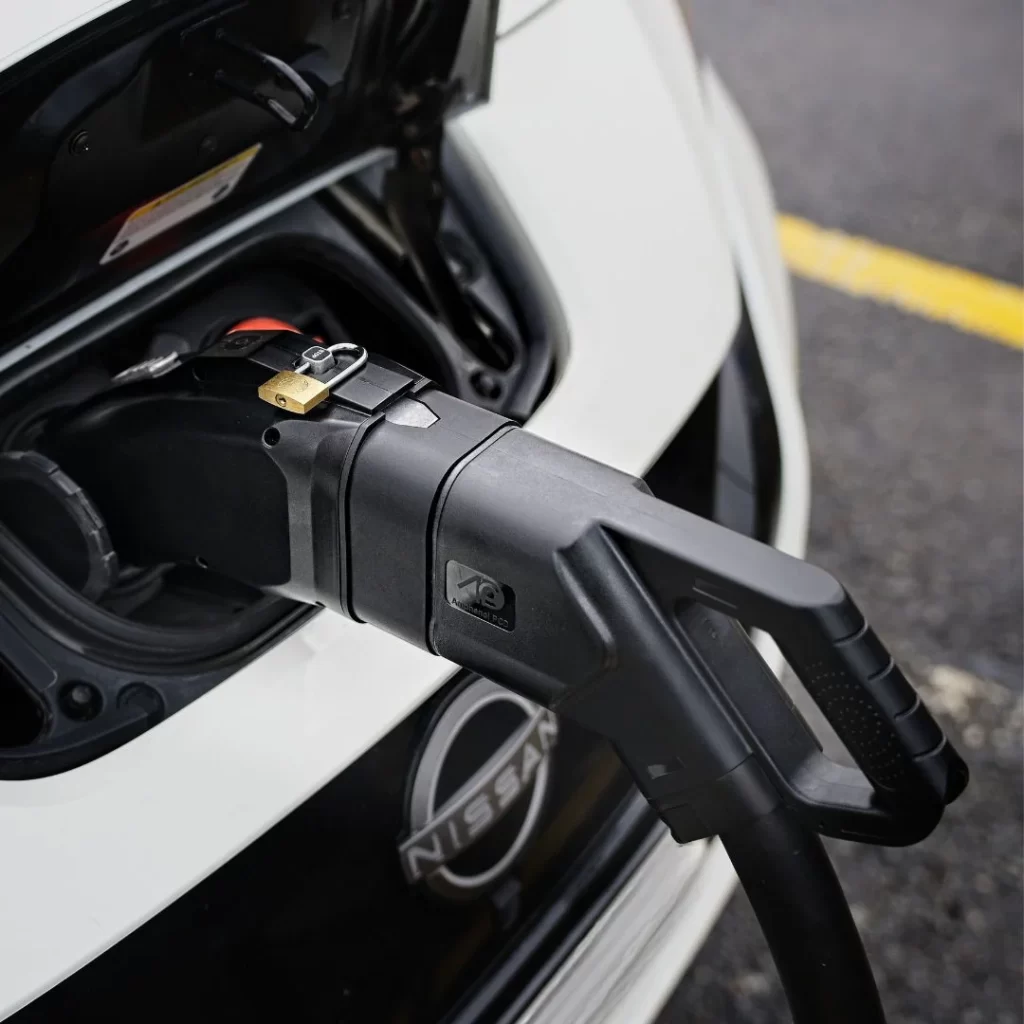
CCS to CHAdeMO adapters offer an increasingly popular solution that expands charging options significantly. These adapters enable CHAdeMO vehicles to charge at CCS charging stations, effectively providing access to Europe’s extensive and growing CCS network. The technology has matured considerably, with adapters now offering reliable performance across various charging station brands.
At Autonlaturit.com, we specialise in CCS to CHAdeMO adapters that open up access to thousands of CCS fast chargers across Europe. Our adapter is compatible with the Nissan Leaf, Lexus UX 300e and Nissan e-NV200. For other CHAdeMO vehicles, please check compatibility with us first to ensure proper operation.
The adapter includes a locking mechanism for security during charging and comes with a two-year warranty. We offer personal customer support to help you understand how the adapter works with your specific vehicle and charging needs. If you’re concerned about CHAdeMO charging availability, contact us to learn how a CCS adapter can restore your charging flexibility and make long-distance travel worry-free again.